
Why is Oregon a Hot Spot for Data Centers?
Posted on May 26, 2026 by Cassie Allen
Tags, General Interest, Energy, Data Centers
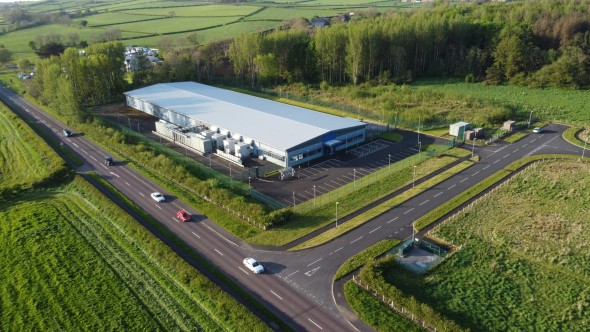
Data centers—and their big energy usage—are a growing issue in Oregon. Over the past decade, our state has become one of the top destinations in the world for big tech companies to build out data centers. But why is Oregon such a hotspot for data centers in the first place? And what are we doing to protect Oregonians from rising energy costs from data centers?
What is a Data Center?
From the outside, data centers don’t look like much. They are big buildings, often appearing as unassuming warehouses or office parks, that tend to be in rural communities. But inside, these centers house vast networks of computing and storage devices.
When you log into your email or share a post on social media, the computing that makes that possible is housed in data centers. This storage can maintain hospital patient information online, operate telecommunication networks, provide hosting for websites, and much more. This computing is associated with more traditional data centers. But data centers also support generative artificial intelligence (AI), such as ChatGPT or Claude.
With the rise of artificial intelligence (AI), the demand for these types of server warehouses has surged to new heights. Oregon currently has at least 142 data centers in operation or planned, ranking it the 9th state in the US with the most data centers.
Oregon Checks All the Boxes for Data Centers
Building a data center requires local approval, addressing land use concerns, construction, and more. Before making such a large investment, big tech companies are making strategic decisions on where they should build. Oregon is extremely attractive to data centers because we check every box for their priorities:
- Reliable, available electricity
- Proximity to network infrastructure
- Available, relatively affordable land
- Cool climate, perfect for cooling systems
- Generous tax breaks and incentives
- Low risk of natural disasters
- Security Considerations
- Cost considerations for land, construction, ongoing operations, and electricity
Attracted by Oregon’s favorable conditions, these large energy users are flocking to Oregon in droves. From 2019 to 2024, data center growth for just Portland General Electric (PGE) has been the equivalent of adding 162,400 families to PGE’s system. This growth has only increased since 2024.
Good Geography in Oregon
Close to Internet Infrastructure
Data center build-outs also rely on access to crucial under-the-ocean fiber optic network hubs. These are needed to connect the work of data centers across the world. These hubs touch land in Oregon, yet another reason why data centers land in our state.
Lots of Land
Oregon has a lot of undeveloped land, one of the reasons why our state is so beautiful! In 2026, the data center industry occupies around 2,900 acres of land statewide. But plans are in the works to make an additional 9,100 acres available for development, quadrupling the industry’s footprint.
Best Deal on the West Coast
No Sales Tax
Unlike surrounding states, Oregon has no sales tax. Big tech companies save tens of millions when buying data center equipment worth billions, like expensive computers needed for server farms. In comparison, Washington state provides a sales tax break on computer equipment, but only in certain counties. California requires a sales tax to be paid on all purchases.
Big Tax Breaks
Our state goes a step further to spur data center development. Unlike Washington and many other states, Oregon allows local governments to grant unlimited property tax breaks to tech companies. These tax breaks don’t need to be tied to job creation either, which is crucial because data centers don’t actually need many employees to operate. According to records compiled by the Oregonian, data centers will avoid paying more than $450 million in Oregon property taxes in 2026 alone.
These tax breaks are hitting Oregonians hard, disrupting beyond just energy cost impacts. In 2024, Oregon schools lost $275 million from these corporate tax breaks. Hillsboro School District, the region with the most data centers in Oregon, has lost the most money to these tax breaks.
Data Centers Add a Lot of Costs to Our Energy Grid
With data center growth on the rise in Oregon, so too is its energy demand. Data centers use a massive amount of energy to operate— an entire city’s worth! A single 30 MW data center uses more electricity than the City of Ashland. Larger, 250 MW data centers, associated with AI, require a similar amount of energy to that of the City of Eugene, Oregon’s third-largest city.
All of Big Tech’s energy usage is straining Oregon’s electrical grid and driving up our energy bills. Utilities now need to keep up with data centers’ skyrocketing energy demand by investing in new energy infrastructure and buying power from other states in some cases. These costs are then recovered by raising customer energy bills.
Hillsboro is one of the top ten fastest-growing data center hot spots in the country. To manage this massive growth, PGE recently completed the Hillsboro Reliability Project in Washington County, which was primarily for serving data centers. The publicly available estimate of part of that project to serve data centers is at least $210 million in local transmission investments. It included two substations built solely to serve data centers. (The actual cost is hidden in confidential legal documents, but it is even higher.)
Reining in Data Centers: The POWER Act (HB 3546)
Passed in 2025, the POWER Act (HB 3546) ensures that data centers and cryptocurrency operations pay their fair share for the significant demands they place on Oregon’s electric grid. The new law allows regulators to fairly assign infrastructure and energy costs to the data centers that cause the costs, rather than passing those costs on to Oregon families and small businesses. This law only applies to Oregon’s regulated electric utilities: Portland General Electric, Pacific Power, and Idaho Power. They provide electricity to the majority of Oregon families.
The major vehicle for these protections is creating a new customer category for data centers within Oregon’s for-profit electric utilities. Utilities can track the energy costs of those unique businesses and bill them appropriately. This protects Oregonians and small businesses from paying for the initial costs of bringing data centers online and the ongoing costs for providing service.
Now, CUB is working hard to ensure that data centers pay their fair share, as regulators work with utilities to implement the new law. We’ll keep pushing for data center accountability, ensuring households aren’t left footing the industry’s big energy bills.
Treating Data Centers Differently (Because They Are!)
Data centers are far outpacing the growth of all other electricity customers. Before passing the POWER Act, data centers benefited from the fact that utilities spread the cost of load growth across all customers. Data centers were lumped into the “industrial” class of customers, despite being very different energy users from other traditional industrial customers. With the rise of data centers, this became an outdated and unfair approach.
Without a way to track data centers’ costs and impacts, residential customers have seen their utilities increase over the last few years.
This year, we are working with regulators, utilities, and other energy advocates to make the POWER Act a reality! Stay tuned for important updates about how new rules will protect Oregonians and rein in data centers’ energy impacts.
Stay Up to Date on Oregon Utility Issues
CUB will continue to advocate for people in Oregon on major utility issues. Sign up for the CUB email list for the latest updates, action alerts, and news on policies that affect the utilities your home relies on.
To keep up with CUB, follow us on Instagram, Facebook, Bluesky, and LinkedIn!



05/28/26 | 0 Comments | Why is Oregon a Hot Spot for Data Centers?