
2020 Boardman Closure Concludes National Precedent Setting Story
Posted on January 21, 2020 by Bob Jenks
Tags, Energy
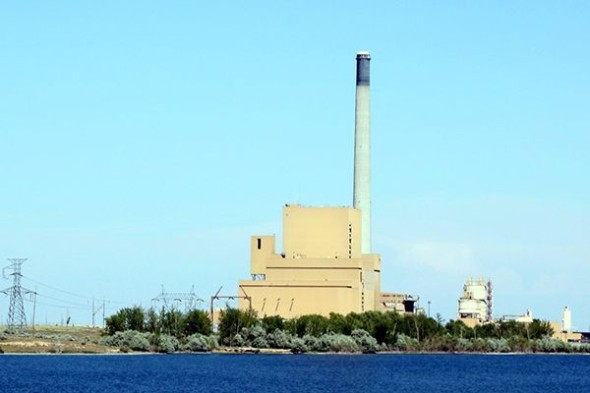
A decade ago, CUB was able to work with Portland General Electric (PGE), the Oregon Public Utility Commission (PUC), the Oregon Department of Environmental Quality (DEQ) and other stakeholders to form an agreement to phase out the Boardman coal plant by 2020. It is now 2020 and Boardman is closing.
The effort to close Boardman actually began in 2007. At that point, no modern coal plant anywhere in the country had closed. The cost of generating electricity with natural gas, wind, or solar was more expensive, so coal was generally still considered an economic way to generate power. Coal was an important “baseload” fuel, necessary because wind and solar were considered too unreliable. While states were passing 25 percent renewable portfolio standards, many believed that was near the upper limit of what the grid could support.
In 2007, Pacific Power was still proposing investing in additional coal capacity. While we were successful in stopping those investments, the idea of closing an existing coal plant seemed farfetched. But Boardman had a problem. Under the Clean Air Act’s Regional Haze rules, PGE was required to invest hundreds of millions of dollars in new pollution control equipment. Just as CUB opposed Pacific Power investing in new coal capacity in the face of climate change, we had concerns about investing hundreds of millions in existing coal capacity.
Hanging over the decision was climate change. The PUC is an economic regulator, but the future regulation of carbon emissions creates an economic risk for investments in coal plants. Environmental regulators at the DEQ recognized the risks of climate change, but the regulation they were enforcing was meant to curb regional haze, not carbon emissions.
The Sierra Club was running a grassroots campaign urging the PUC to require PGE to close the plant in 2015. Believing that closing the plant in 2015 was too risky, PGE was proposing to invest between $500 - $600 million upgrading pollution controls at the plant and then operate the plant until 2040.
CUB was concerned that PGE’s Integrated Resource Plan (IRP) did not demonstrate that closing the plant in 2015 was least cost/least risk, but that attempting to run the plant until 2040 created a great deal of risk. We needed to come up with an alternative.
The regional haze rules are designed to require cost-effective environmental upgrades on industrial facilities that contribute to regional haze. Because cost-effectiveness was associated with the life of the plant, shortening the life of Boardman would reduce the required pollution control investment. A $500 million retrofit would not be cost-effective for a facility that was going to close in 2020. At first we were told that closing the plant wasn’t considered “pollution control technology,” so DEQ could not require closing the plant in 2020.
Ultimately, CUB proposed that PGE voluntarily commit to shutting the plant down in 2020. This would allow DEQ to avoid imposing hundreds of millions of dollars in retrofits. By avoiding the retrofits, this plan saved money, and by giving PGE time to plan for replacing the power plant, it reduced risks. So the PUC could adopt it as least cost/least risk. The economics of this plan were convincing, and PGE got on board and supported it.
The agreement came together thanks to a confluence of CUB pursuing Boardman’s phase-out through PUC and DEQ processes, the Sierra Club and other environmental stakeholders weighing in on why this was necessary, and PGE seeking a reasonable outcome.
At the time, the Boardman closure agreement was a big deal. There had been no previous agreements to close coal plants anywhere in the country. And closing a coal plant to avoid environmental retrofits required under Regional Haze rules had never been attempted.
Since then, closing coal plants to avoid Regional Haze investments has become fairly common. In addition, lower prices for wind, solar, and natural gas generation have made many coal plants uneconomic. Increasing pressure to reduce carbon emissions is causing states to move electric generation toward 100 percent clean energy. The Sierra Club believes that 302 US coal plant have shut down or have agreements to shut down.
Boardman was the first, and later this year it will stop operating. When it does, customers will not even notice. Electricity will remain reliable, even without Boardman. PGE has acquired the resources needed to replace Boardman and there will be little impact on rates. But PGE’s generation mix will become significantly cleaner.
To keep up with CUB, like us on Facebook and follow us on Twitter!



01/21/20 | 3 Comments | 2020 Boardman Closure Concludes National Precedent Setting Story