
Wildfires and Utility Liability: Regional Planning Conversations are Heating Up
Posted on September 11, 2019 by Mike Goetz
Tags, Energy
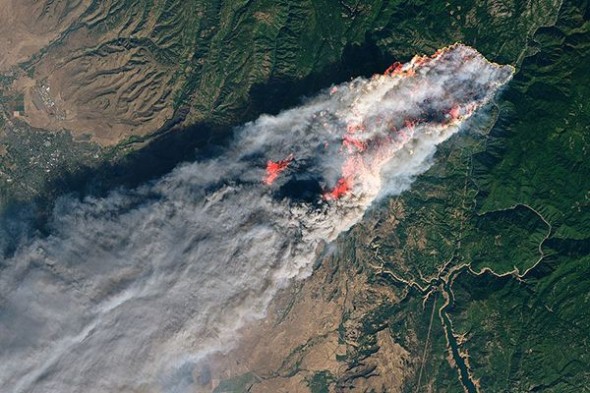
It’s no secret that anthropogenic accelerated climate change is heating up our planet and increasing the severity, frequency, and duration of disturbance regimes such as floods, storms, and wildfires. While any and all temperature and weather fluctuations can have an impact on a utility’s system, the wildfire seasons that the west has experienced in recent years — and their attendant utility system impact — have demanded the attention of utilities, regulators, and stakeholders throughout the west. Perhaps most notorious was last year’s historically tragic Camp Fire in Paradise, California. It was the deadliest and most destructive wildfire in California history, and authorities determined that it was caused by California utility Pacific Gas & Electric (PG&E) power lines. PG&E has agreed to pay $1 billion in damages associated with a series of wildfires throughout California, which have left communities picking up the pieces and the utility reeling from a financial perspective.
The dangers of wildfires are not new to Oregonians. We have seen our share in recent years, including the 2017 Eagle Creek fire that rained down ash in Portland. As we look south to the recent wildfires in California, it is important to remember that the lessons learned from the interplay of utility operations, wildfires, and public safety are applicable here. Even though Oregon does not experience the same warm and arid prevailing winds that lead to the spread of wildfires in California, our state is not immune to their dangers. Similar wildfire regimes affect much of the western United States and Canada and, although each state and province has different climates, environmental regulations, utilities, and regulators, most are at least beginning to grapple with issues related to the complex intersection of wildfires and utility regulation.
That was the topic of last month’s West Coast Utility Commissions Wildfire Dialogue, a one-day event that brought together regulators and interested stakeholders from around the west to address issues related to wildfires, liability, and risk mitigation. Bob Jenks attended on behalf of CUB, and the event featured comments by commissioners from the various western utility commissions—the Oregon Public Utility Commission, the Washington Utilities and Transportation Commission, the California Public Utilities Commission, and the British Columbia Utilities Commission. These different regions and respective issues face different risks associated with wildfires. But in general, the proliferation of wildfires throughout the west can either cause damage to existing utility infrastructure, or utilities can face severe penalties—as seen in California—if a utility asset is found to have started a wildfire. How to assess and mitigate these risks was central to the discussion at the symposium.
Outside of that larger conversation, here in Oregon both Pacific Power and Portland General Electric (PGE) have begun to assess the risks that wildfire may cause to their respective systems. One of the most effective ways to reduce the risk of utility assets causing wildfire has been—and continues to be—robust control and trimming of brushy vegetation around transmission lines. While this is highlighted in the recent plans presented by both Pacific Power and PGE, it is not a new practice, and indeed, utilities are required to carry out vegetation management plans as part of their ongoing responsibility to provide safe and reliable service. For its part, Pacific Power has begun to explore the possibility of de-energizing certain parts of their service territory when the risk of wildfire is increased. This is a controversial tactic that has been deployed by utilities in California.
CUB is pleased to see the conversation around wildfire risk and attendant mitigation take the next step here in Oregon and throughout the west, and we look forward to working with utilities, regulators, and stakeholders to assess utility risk mitigation plans. Our eye will be toward minimizing the risk on the system and safeguarding the public, while working to ensure that customers do not have to bear increased costs for what the utilities should already be doing: ensuring their systems are safe and reliable.
To keep up with CUB, like us on Facebook and follow us on Twitter!



09/11/19 | 0 Comments | Wildfires and Utility Liability: Regional Planning Conversations are Heating Up