
When a Solar Panel is More Than a Solar Panel
Posted on April 30, 2026 by David Beltrán Barajas | CUB Oregon and Dr. Dawn Nafus
Tags, General Interest, Energy, Data Centers
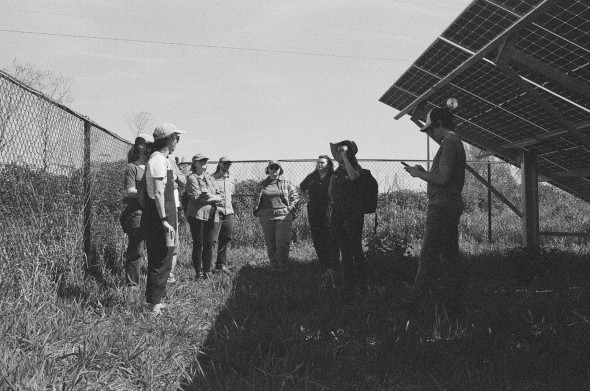
In early April, I joined a tour of North Cully Solar Park, organized by CUB and Verde, a Cully neighborhood community and environmental organization. I went because I live nearby, and as a social scientist who thinks a lot about data center energy use, I wanted to see what something very different would be like.
What I didn’t expect was a potent example of hope itself, and a lesson in why infrastructures are so crucial for hope.
Infrastructures aren’t just the invisible stuff you take for granted. They are more like their own centers of gravity. The pieces—the wires and photovoltaics and contracts and permitting and so on—all need to come together before they work as a whole. That is, before they run smoothly enough for you to take them for granted.
The history of electrification shows that no one just “rolls out” an infrastructure. Pieces are drawn in over time, piggybacking on one another in layers. At first, they don’t necessarily all fit or coordinate, but over time and with adjustment, they click. This is what makes infrastructures so powerful: through all this piggybacking and layering, the whole eventually changes.
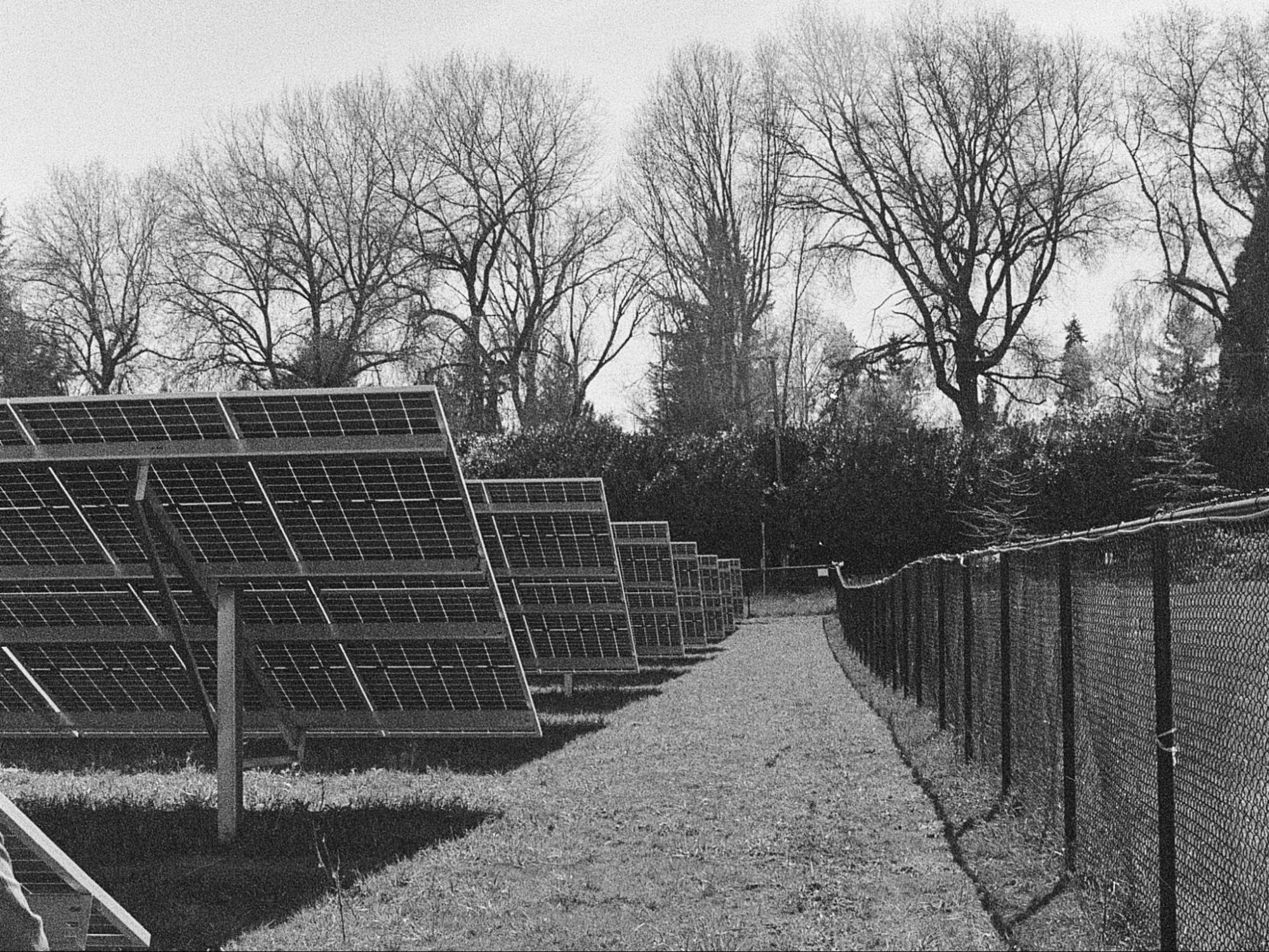
The Gooding Annex solar park boasts 10 rows of solar panels with a capacity of 1.23 MW. VERDE hopes to build a new solar park adjacent with about 1.5 MW of capacity in the coming years.
The tour was impressive — 1.23 megawatts of power generated right next to the airport, and turned into electricity bill credits for 150 Portlanders with low incomes via Pacific Power. This is what that kind of capacity represents. 1 MW of electricity can power between 100 and 200 homes annually. For the Cully residents helped out by this solar park, international conflicts were not going to stop these electrons from flowing.
Initiated by a $4 million Portland Clean Energy Fund grant to Verde, the project seems to have taken a life of its own. At every possible decision point—every element of the layering—the community was centered.
Here are some examples. The credits could have just gone to direct bill payers — homeowners — but instead were designed in ways that include renters, so that those who might need it most also benefit. The installation process could have just gone to the lowest bidder, but instead prioritized training and employing people who face discrimination and exclusion on the open labor market. The maintenance of the land could also have gone to the lowest bidder, but instead is done by members of neighboring Dignity Village, a self-governed community of people previously living on the streets. In fact, the project also supports access to solar power at Dignity Village, thus reducing the risk of fire.
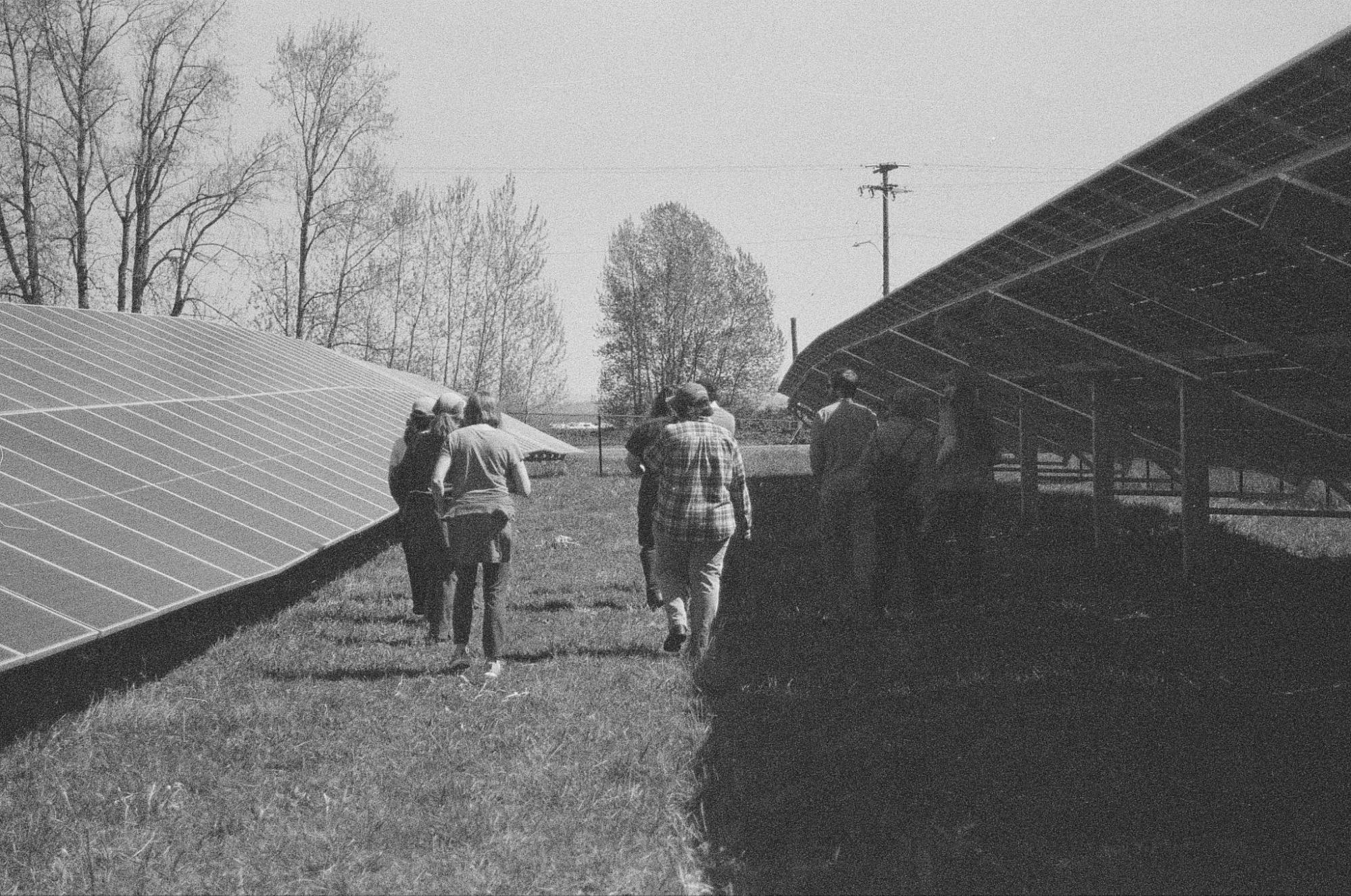
Community members walking between the rows of solar panels. Tatiana explains that the week prior, they’d had sheep grazing at the solar park as a form of regenerative maintenance on the land.
This approach extended to the land itself. Land maintenance could have been a thoughtless “mow and blow,” but Verde treated the land as something alive, not something to beat back. The tour walked through sheep prints, hardened into the recently dried soil. The sheep had brought the grasses down to a manageable level and added their fertilizer. Our guide Tatiana discussed plans for a local organization to plant pollinator-supporting species, at which point someone raised the prospect of growing edibles, and started a connection to someone else who could do that. She also pointed out that the native plant restoration was underway just outside the fenceline, also done by Dignity Village locals.
In other words, this was becoming a place that mattered to people, and even other species. The panels were an anchor for more.
It became a place that mattered because of these incremental decisions. This infrastructure isn’t just an infrastructure for moving electrons around; it has become an infrastructure for much-needed relationships. Each choice shifts the center of gravity towards the community and all its members. That is what grows and strengthens connections.
We usually think about a large solar array as just the physical back end of a bill that arrives monthly, the one that you may or may not be able to pay. At a time when so much seems like it is going off the rails, I am glad that the folks at Verde saw a lot more.
Dr. Dawn Nafus is an affiliate faculty member in the Department of Anthropology at Oregon State University.
Stay Up to Date on Oregon Utility Issues
CUB will continue to advocate for people in Oregon on major utility issues. Sign up for the CUB email list for the latest updates, action alerts, and news on policies that affect the utilities your home relies on.
To keep up with CUB, follow us on Instagram, Facebook, Bluesky, and LinkedIn!



04/30/26 | 0 Comments | When a Solar Panel is More Than a Solar Panel