
PGE and Pacific Power File Power Cost Updates
Posted on April 10, 2019 by Will Gehrke
Tags, Energy
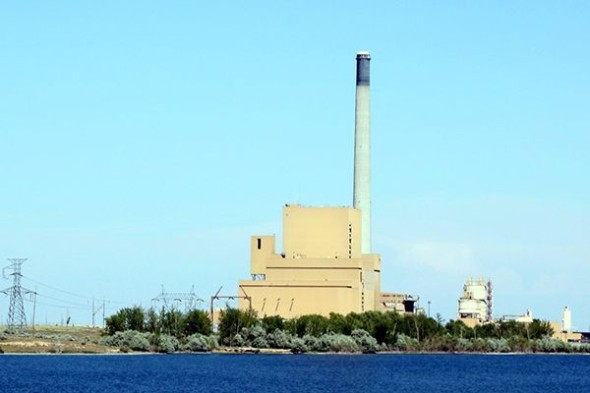
Another year, another power cost filing for Portland General Electric and Pacific Power. Every year, the electric utilities update their forecasts of variable power costs (purchased power, fuel, operation and maintenance, and demand). CUB intervenes in these annual power cases to determine if the company’s forecasted costs result in just and reasonable rates for Oregonians. This is important because forecasted power costs end up on your electricity bill.
Portland General Electric (PGE)’s initial power cost forecast estimates a $63.2 million increase to variable power cost. This increase would result in the average residential PGE customer’s bill going up by 3 percent. One of the major drivers of the increase is operation of the Boardman plant (pictured above). In 2010, PGE agreed to close Boardman by the end of 2020. Normally, power plants are operated according to economic or customer need. If a power plant’s operating cost is less than the market price, the power plant is “in the money”, and runs to benefit ratepayers. (When a power plant is not in the money, the company sells power to the market rather than to its customers.) PGE must operate Boardman to minimize the amount of coal supply that will be in its inventory at the time of decommissioning. This means in the last year of Boardman’s operation, the power plant might be dispatched to minimize decommissioning costs rather than to minimize power costs. CUB will be carefully examining the impact of Boardman’s closure.
Another factor leading to increased variable power costs is an expected sustained increase in market energy prices. Natural gas fuels many of the power plants in the Western US, so power prices are linked to natural gas prices. Due to a supply glut from Canada, natural gas prices have been at historic lows and this has helped keep electric rates affordable. But last fall’s Enbridge pipeline rupture has constrained natural gas supply across the Pacific Northwest, and raised gas prices. It appears that PGE is expecting more expensive natural gas next year.
Meanwhile, Pacific Power has projected an estimated $14.6 million decrease to its variable power cost. This would result in a 1 percent decrease in the average residential customer’s bill. The decrease is due to Pacific Power’s wind generation requalifying for production tax credits. Production tax credits are a federal tax credit for new wind generation plants. Later this year, Pacific Power plans to repower its wind generation, using the latest wind technology to build a new and improved wind system. The benefits of production tax credits will flow back to Pacific Power’s customers.
Another factor is that Pacific Power appears to not be as affected by the Enbridge pipeline interruption, because most of its gas generation is located in Wyoming and Utah. (Pacific Power serves customers in six states, while PGE only serves customers in Oregon.)
CUB is examining the process and rationale used by Pacific Power and PGE to forecast their variable power costs. Over the next few months, CUB will review and critique testimony from both utilities to ensure that any ensuing adjustments to residential customer rates are fair and reasonable.
To keep up with CUB, like us on Facebook and follow us on Twitter!



04/10/19 | 0 Comments | PGE and Pacific Power File Power Cost Updates