
PCEF and the People It Supports
Posted on October 9, 2026 by David Beltrán Barajas | CUB Oregon
Tags, General Interest, Energy

If you’re an energy head or a climate nerd, you’ve probably been seeing Portland Clean Energy Fund (PCEF) being targeted for all sorts of things all year long. Be it to hire more cops, renovate the Moda Center, or in more climate-focused lanes like funding TriMet. PCEF is a climate fund collected from large corporations to support community-led approaches to reducing emissions and supporting Portlanders. Since its inception, it has been incredibly successful in investing in clean energy and many other projects for our communities.
PCEF has done many wonderful things, ranging from building Portland’s only in-city community solar field to providing grants for micro mobility for Portlanders. These funds also helped to meet the moment and protect Portlanders after events like the 2021 heat dome by providing heat pumps and ACs for those who need them. PCEF funding has gone to materially help Portland from the increasingly encroaching effects of climate change on the Pacific Northwest.
Today I want to share a story with you about a 100-year-old Portland home, aging gas pipes, and a cold holiday season. This is the story of how PCEF is helping Julia get her heating back and protecting her against future extreme winters and summers all at once.
Portland Clean Energy Fund (PCEF) in Action: A Story About a Portland Home
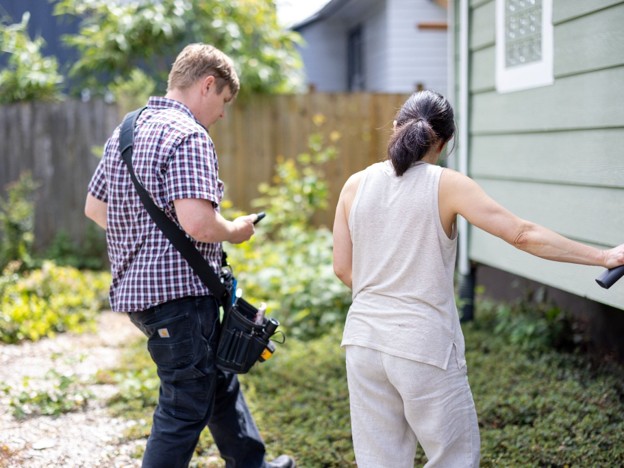
Jeremy (he/him), an In-Home Auditor with Community Energy Project, stands outside with Julia (she/her), inspecting a cold spot on the exterior of Julia’s home.
Julia is a resident of SE Portland, living in a hundred-year-old home. She was fortunate enough to purchase her home a few years ago after some big life changes, a big win for many Americans.
Her home had natural gas for heating in the winter, and like many Portland homes, she had no AC. A decade ago, this wasn’t an issue because of our region’s historically beautiful temperate weather.
In late 2025, Julia’s home had a gas leak in the walls. She did the right thing and called NW Natural. They determined that the leak was not easily fixed without being costly to Julia — costs she couldn’t take on by herself — so NW red-tagged her meter, leaving her without any gas service at all.
Julia spent the holidays and all winter without gas. And this wasn’t just losing her furnace to heat her home. Julia not only couldn’t keep her home warm, but she also couldn’t cook on her stove because all her appliances were built for a gas system. And if having a cold home and not being able to cook a meal at home weren’t bad enough, she went the entire winter taking cold showers in order to save money.
The winter was an uncomfortable experience, but she made it work. However, comfort is one thing; the finances hit harder. She shared with me that her electric bill was a sore spot due to trying to heat her home with portable heaters. These heaters are made to warm small spaces, not someone’s whole home that they spend much of their time in. The longer she used these inefficient portable electric heaters, the higher her power bills rose.
High heating bills are not unique to Julia. Many Portlanders feel the effects of inefficient heating, particularly those with cadet or baseboard heaters common in apartments. Too many people have outdated, inefficient heaters, contributing to astonishingly high electric and gas bills.
With the help of the Portland Clean Energy Fund and the organizations it supports, homes like Julia’s have the opportunity to benefit. For Julia, the benefit is not in going back to old gas appliances, but in moving toward an even more resilient home than she had before.
Community Energy Project: Over 45 Years of Helping Portlanders
Julia reached out to me in January of 2026. She shared with me what she’s going through, knowing I worked with or around utilities. She asked if there was anything I could do to help or point her in the right direction. Right away, I reached out to my colleagues at the Community Energy Project (CEP) about what steps she can take to find help.
Thankfully, this is CEP’s lane! For over 45 years, CEP has been helping Oregonians weatherize and update their homes to be energy efficient. Importantly, CEP does much of its work thanks to PCEF grants.
Energy Assessment for the Whole Home
Within a few months, we had folks on the ground doing an energy assessment on Julia’s home.
Community Energy Project sends out its In-Home Auditor, who does a whole-home inspection to get an understanding of what issues are creating an energy burden in the home. This also helps them determine if the energy upgrades the home could use are a good fit for what their program can fund.
These issues can include:
- Holes and openings allowing air to leak between the inside and outside of the home
- Outdated or broken appliances
- Poorly functioning or missing mechanical ventilation in high humidity areas like bathrooms and kitchens
- Outdated or missing insulation
- Poor sealing and insulation in basements, attics, and other areas of the home
- Replacing outdated and non-functioning gas appliances with high-efficiency electric appliances.
This entire time I’ve tagged along for the visits like a fly on the wall, trying to learn about what the process is like. Very simple, honestly.
Finding the Right Fixes
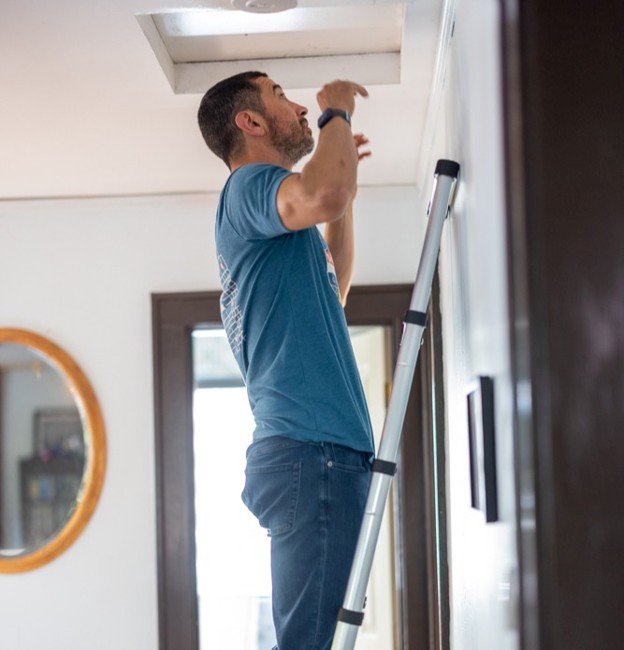
Community Energy Project’s PCEF Program Manager, Geoff (he/him), heads into the attic of Julia’s home to get a better look at what areas of concern need to be addressed to ensure the home is properly sealed, insulated, and healthy.
After the first home assessment, Community Energy Project does a second one, looking to get an exact scope of work that can be covered for the homeowner. Here they’ll also do a blower door test to understand how sealed the home is and where there are gaps to seal that a simple visual inspection might not reveal.
Julia’s second home inspection was done this past August, and the plan for energy upgrades was created. CEP shared that Julia could expect to hear back from a contractor in the next month. She now has a real possibility of getting a high-efficiency electric heat pump that would provide heating and cooling, using the same ductwork that used to serve her gas furnace. Ductwork that’s currently sitting unused. All by November of 2026. All funded by the Portland Clean Energy Fund.
All of this likely would have been difficult or extremely expensive for Julia if we didn’t have organizations like CEP or programs like PCEF.
“This work is still expensive, but the burden shifts from an individual homeowner to a collective community-based fund.” - Abasi Umoh, In-Homes Auditor, Community Energy Project
Each project, including Julia’s, goes through an approval process to guarantee the project will significantly reduce the home’s carbon emissions. If Julia’s project is approved, PCEF will cover 100% of the cost burden of all the upgrades, including a new high-efficiency heat pump.
The Humans Behind the Funding
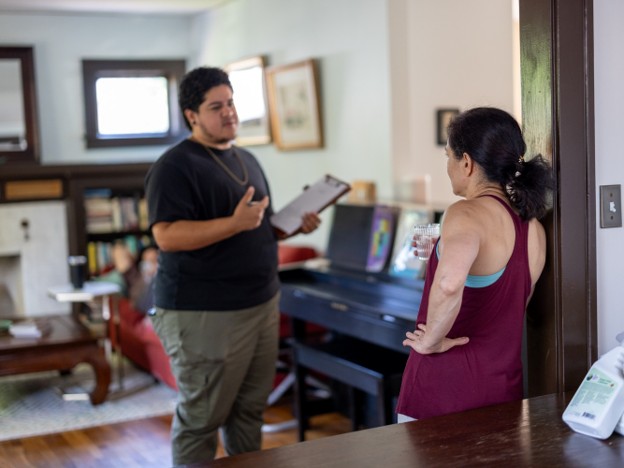
Abasi (they/them), a Community Energy Project In-Homes Auditor, walks Julia through some of the details of the inspection and areas where they can help in reusing the existing ducting for a possible ducted heat pump to provide both heating and cooling.
Through this entire process, I’ve seen the toll that living without a functional home has taken on Julia. The stress of having to take an uncomfortable cold shower every day. Having to sit with hot, still air in the summer. The inability to cook like normal because her stove hasn’t worked all year. The stress of seeing higher-than-average bills in an attempt to warm and cool her home. And the stress of having to move budgeting priorities around to ensure the bills get paid. It all adds up over time and can be draining.
It can be so easy to grow accustomed to the new added stressors until a bad situation just becomes our new normal. Julia got through this past winter and this recent summer. I’m sure she could have grown accustomed to this new norm, but she shouldn’t have to.
The Portland Clean Energy Fund exists exactly for the purpose of helping our community with big issues like this. This is why it is so important for PCEF to be preserved and continued.
There are real-life Portlanders who are being helped out by PCEF and the community initiatives that utilize the fund. There are important projects that have been awarded. PCEF isn’t just a pool of money. The program is going to help people like Julia. And likely neighbors and community members that you may not even know have been touched by the fund!
Beyond Portland: Eugene Seeks a Clean Energy Fund
In Eugene, community organizations are trying a similar approach to reaching local climate goals: passing the Eugene Clean Energy Fund (ECEF).
Activist and grassroots organizations have come together to launch a ballot initiative campaign. If passed, the ballot measure would establish a fee on large corporations to fund local climate actions.
CUB has officially endorsed the initiative and encourages other organizations to support these local efforts.
Editor’s Note: The name of the main subject of this story, Julia, has been changed to protect her privacy.
Stay Up to Date on Oregon Utility Issues
CUB will continue to advocate for people in Oregon on major utility issues. Sign up for the CUB email list for the latest updates, action alerts, and news on policies that affect the utilities your home relies on.
To keep up with CUB, follow us on Instagram, Facebook, Bluesky, and LinkedIn!



10/09/26 | 0 Comments | PCEF and the People It Supports