
Not Too Taxing To Us: Ensuring Customer Benefit from Lower Utility Taxes
Posted on February 2, 2018 by Mike Goetz
Tags, Energy
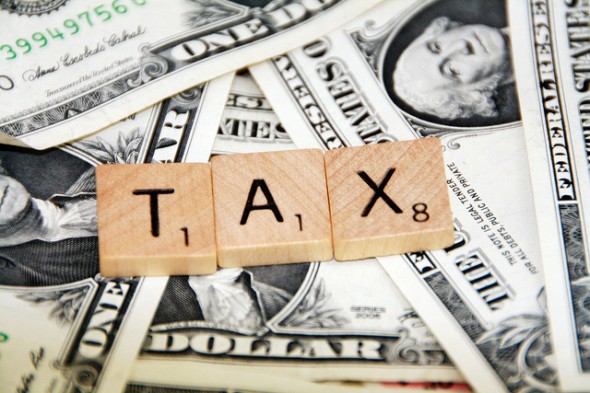
In the latter part of 2017, there was much ado about the potential federal tax reform measure floating around in Washington, DC. The bill that was eventually passed—the Tax Reconciliation Act, Public Law Number 115-97 (“Tax Cuts and Jobs Act”)—was enacted on December 22, 2017. While the legislation includes several provisions that directly or indirectly impact utility industries, the most important provision is the lowering of the federal corporate income tax rate from 35 percent to 21 percent beginning January 1, 2018.
The taxes that are charged to utilities are recoverable in rates, so a significant tax decrease ought to lead to a reduction in utility rates. The problem is that utility rates are set on a forecasted basis through general rate cases, which for most utilities happen every few years. But we don’t want customers to have to wait years to see the benefits of the utilities’ new lower tax rates.
Oregon has a law that allows a utility, another party like CUB, or the Oregon Public Utility Commission (PUC) to file an application to track identifiable utility revenues or expenses for later inclusion in rates. At the beginning of 2018, when the tax decrease took effect, applications were filed for all the regulated energy utilities. This means that tax reductions to the utilities are being tracked, so that they can be passed through to customers, probably as a credit on utility bills. Portland General Electric alone estimates $60-$70 million in benefits to be passed through to customers in 2018. For residential customers this represents about 4 percent of bills or $50/year. CUB estimates that the total benefit to Oregon customers of electric and natural gas utilities will be more than $200 million.
This process happened easily this year. The utilities, the PUC staff, and CUB discussed the need for the applications as the tax bill was debated, and there was never any doubt that this money would be tracked and sent back to customers.
But That Wasn’t Always The Case
In 1990, Oregon voters passed Ballot Measure 5 which cut property taxes across the state and reduced utility property taxes by approximately $10 million. Utilities believed they should be able to retain the tax savings for their shareholders until their next rate case, but CUB stepped in and filed applications to track this tax savings to return it to customers. Utilities like Pacific Power and Light (now Pacific Power), and Northwest Natural Gas (now Northwest Natural) opposed CUB’s application. But CUB won and millions in property tax savings were passed on to customers.
Once we established the precedent that significant reductions in utility taxes will be tracked and returned to customers, over time this became the standard operating procedure in Oregon. Because CUB fought to ensure that $10 million in tax savings was returned to customers in 1991, no fight is required to ensure that $200 million in tax savings are returned to customers this year.
To keep up with CUB, like us on Facebook and follow us on Twitter!



02/02/18 | 0 Comments | Not Too Taxing To Us: Ensuring Customer Benefit from Lower Utility Taxes