
Klamath Dam Removal Agreement Protects Customers from Rate Increases
Posted on November 23, 2020 by Amelia Lamb
Tags, Energy
November 2020 Editor Update:
This blog was originally published on April 12, 2016. On November 17, 2020 a new deal was announced by Oregon Governor Kate Brown and California Governor Gavin Newsom to ensure completion of the Klamath Basin dam removal and river restoration. Transferring dam ownership from PacifiCorp to the Klamath River Renewal Corporation was crucial in gaining support from both Oregon and California utility regulators and protecting utility customers in the 2016 agreement.
The 2016 agreement faltered, though, due to a July 2020 decision by the Federal Energy Regulatory Commission, the agency that manages dam licensing, to only allow a partial ownership transfer with PacifiCorp remaining as a co-licensee. This raised liability and ratepayer cost concerns for PacifiCorp.
The November 2020 deal solves this problem by having Oregon and California take over ownership of the dam during the removal process, facilitating PacifiCorp’s complete removal from the license. The Klamath River Renewal Corporation continues in its role to manage and pay for dam removal.
Dam removal under this new agreement is back on track to occur in 2023. A free flowing river in the Klamath Basin has long been a priority for tribal communities and concludes years of scientific analysis and negotiation.
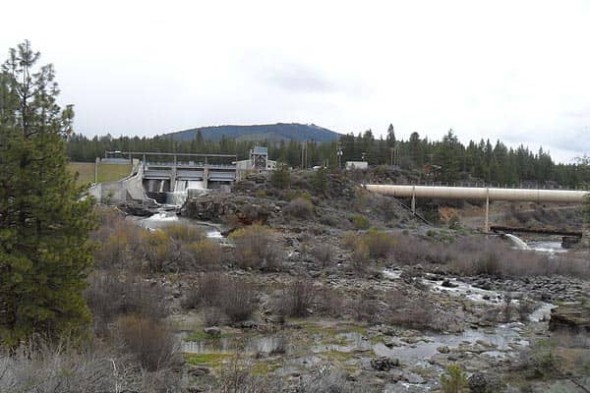
Agreement was reached on Wednesday April 6th on two deals to remove four PacifiCorp-owned dams on the Klamath River in Southern Oregon and Northern California. A ceremonial signing was held at the mouth of the Klamath River – parties to the signing included Pacific Power President and CEO Stefan Bird, Oregon Governor Kate Brown, California Governor Edmund G. Brown Jr., US Department of the Interior Secretary Sally Jewell, and NOAA Administrator Dr. Kathryn Sullivan. The combined removal of the dams and subsequent river restoration effort will constitute one of the largest projects of its kind in the nation.
This has been the culmination of years of often heated negotiations overseen by the FERC and involving Klamath Basin tribes; fishery, farming, and ranching interests in the region; water users; and environmental NGOs. CUB also participated in this process in two crucial ways: by securing the Public Utility Commission (PUC)’s authority to determine whether the dams could be removed, and by providing analysis to the PUC to show the economic case that removing the dams would be less expensive for customers than relicensing them.
In 2009, the Oregon legislature approved a bill (Oregon SB 76) to allow PacifiCorp to start charging customers for Klamath dam removal. During the 2009 session CUB successfully got that bill amended to ensure that the project approval process would first require a PUC review to ensure that removing the dams was in customers’ best interest – customers should only fund dam removal if that option has a lower price tag than relicensing the dams so they can continue to operate.
Subsequently, when review of the dam removal plan came before the PUC, CUB provided analysis comparing the costs and risks associated with relicensing, which would have included significant changes in the design of the dams in order to allow fish passage, with the cost of dam removal. CUB concluded that dam removal was the least cost/least risk option. The analysis is confidential because the cost of relicensing and improving the dams was being litigated at the Federal Energy Regulatory Commission, so we cannot share the numbers, but we can share our conclusion and how we ensured that the review was required.
From our testimony to the PUC:
When Senate Bill 76 was first introduced into the Oregon Legislature, it did not contain a requirement that the Oregon Public Utility Commission (OPUC) must examine the Klamath Hydroelectric Settlement Agreement (KHSA) to ensure that dam removal would result in “fair, just and reasonable rates.” Signing the KHSA was a discretionary action on behalf of PacifiCorp. PacifiCorp had the choice of pursuing dam relicensing instead of agreeing to dam removal. CUB’s concern in the legislature was that no party was examining the KHSA to determine whether the choice made by PacifiCorp was reasonable, prudent and in the interests of Oregon customers. Removal of the dams may have benefits to the Klamath basin and coastal fishing economies, so the State of Oregon as a whole may have an interest in dam removal. But, the interests of the State and the interests of PacifiCorp’s ratepayers are not necessarily the same. CUB, therefore, pushed strongly to amend the bill to include such a provision requiring review of the plan by the OPUC so as to ensure that customers were adequately protected from unnecessary rate increases.
CUB finds the terms of the proposed settlement to be prudent. The portion of the project’s costs incurred by PacifiCorp’s Oregon customers, while large, is acceptable given the expected benefits of the project as compared to the quantity of financial risks that will be assumed by customers. The agreement that the overall customer contribution be limited to $200 million ($184 million to Oregon customers) provides adequate assurance that ratepayers will not be responsible for cost overruns or other unanticipated charges. The predicted costs of decommissioning compare favorably with the costs associated with relicensing the dams, and decommissioning poses significantly fewer risks to PacifiCorp and project stakeholders.
In short, CUB is proud of the parties involved for reaching agreement on a plan that will restore a major swath of habitat in the Klamath Basin, but even more so, we are glad to have participated in the process to ensure that customers were protected financially and would receive measurable benefits from the deal.
To keep up with CUB, like us on Facebook and follow us on Twitter! You can also keep up to date with breaking news by joining our email list today!



11/23/20 | 0 Comments | Klamath Dam Removal Agreement Protects Customers from Rate Increases