
Incoming Biden-Harris Administration Represents About Face on Climate
Posted on December 3, 2020 by Samuel Pastrick
Tags, Energy
Decarbonization policies in response to climate change are vitally important for many reasons. CUB is particularly concerned with the economic risks that utility customers face due to climate change. CUB welcomes anticipated changes in federal climate change policy from the incoming Biden-Harris administration. The Trump-Pence administration has emphasized regulatory rollbacks and anti-science rhetoric. All signs point to President-elect Joe Biden taking a radically different approach, both domestically and internationally, to respond to the existential challenge of climate change that already harms Oregonians.
Individual states can and do adopt sweeping energy and climate change policies. Depending on political will, state legislatures can direct regulatory authorities like public utility commissions and/or other state agencies to plan for and take steps to mitigate climate change. Governors can also use executive authority to establish greenhouse gas reduction targets and instruct state agencies to develop programs to meet those goals. This is what Governor Brown accomplished earlier this year with the Executive Order on Climate Action, EO 20-04.
When it comes to a clear and present danger like climate change, coupling state policies with decisive action at the federal level is critical. Control of the U.S. Senate, which won’t be clear until after two January run-off elections in Georgia, will determine the extent to which the Biden-Harris administration can take legislative action to begin their first term.
Nevertheless, President Biden can take sweeping executive action to reduce the United States’ net contribution to global greenhouse gas emissions and provide leadership on the world stage.
Candidate Biden campaigned on an ambitious climate change platform, proposing $2 trillion in federal government investments to transform our economy to one that is powered entirely by clean and renewable resources by the middle of this century. Policy details should begin to emerge in the coming weeks and months, but here is a list of potential and/or already planned actions focused on combating climate change:
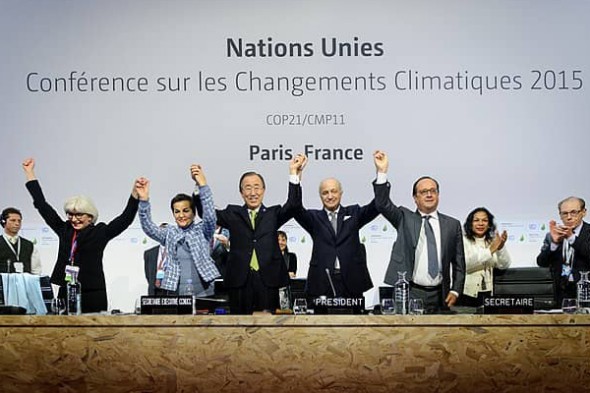
- Rejoin the Paris Climate Accord. President-elect Biden has clearly stated that his administration will formally re-enter the agreement on his first day in office. Doing so evidently requires little more than a letter to the United Nations.
- Create a new White House inter-agency group, similar to the National Security Council (NSC), to coordinate climate change policy across the whole of the federal bureaucracy. On the international front, President-elect Biden has already named former U.S. Senator and Secretary of State, John Kerry, as the first-ever U.S. Special Envoy on Climate, and Mr. Kerry will have an official seat on the NSC.
- Double down on Obama-era financial commitments to the international “Green Climate Fund.” The fund is designed to support less resourced countries to transition their economies in response to climate change. The Trump administration halted all payments, reneging on the commitment made in 2015 within the context of Paris Accord negotiations.
- Include climate change funding provisions in an eventual COVID-19-related federal relief package. Such provisions could include increased federal funding for weatherization to improve building efficiency, transportation electrification, and clean energy development.
- Decisive executive orders to cut greenhouse gas emissions. These could include methane limits for oil and gas drilling; fuel economy standards for light, medium, and heavy-duty vehicles that pave the way for eventual electrification of all retail and commercial vehicles by a certain date; and efficiency standards for buildings, appliances, and other consumer products.
- Conserve at least 30 percent of U.S. land and water by 2030. This is known as the “30 by 30” proposal and would, among other things, reverse course on several Trump Administration decisions to do away with various environmental restrictions on public lands. Paired with this effort could be a permanent freeze on offshore drilling and oil and gas exploration on on all U.S. public lands.
- Prioritize environmental justice by forming a national advisory board to coordinate domestic response efforts across all federal agencies. President-elect Biden has signaled a particular interest in confronting disproportionate environmental harms to frontline communities.
- Better leverage the unparalleled procurement power of the federal government by imposing carbon constraints on all federal contracts and investments. The U.S. federal government buys a lot of “stuff” and those who hold the purse strings wield significant negotiating power.
The above list reflects recent news reports and public statements made by the incoming Biden-Harris administration. It is by no means exhaustive, nor does it reflect all that can or should be done using the President’s executive authority to mitigate global climate change. Unlike their predecessors, the Biden-Harris administration appears to reflect the public’s growing awareness that climate change is the most pressing public policy issue of our time. But regardless of this new and welcome tone, Oregon must continue to reduce greenhouse gas emissions consistent with the science-based goals that inform our state’s climate policies.
To keep up with CUB, like us on Facebook and follow us on Twitter!



09/05/22 | 0 Comments | Incoming Biden-Harris Administration Represents About Face on Climate