
Idaho Power Submits 2019 IRP
Posted on July 23, 2019 by Sudeshna Pal
Tags, Energy
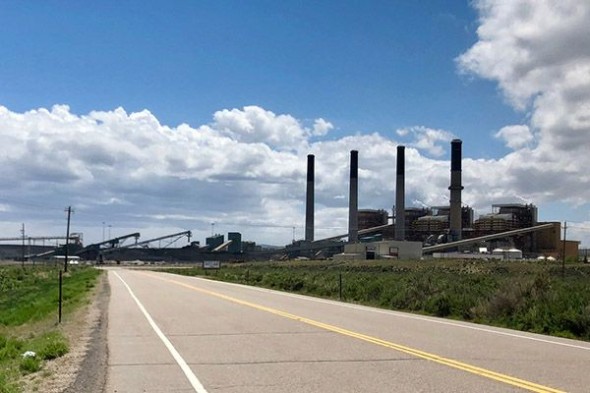
Idaho Power Company recently submitted its Integrated Resource Plan (IRP) for acknowledgement at the Oregon Public Utility Commission (PUC). The IRP is a 20-year resource acquisition planning document that utilities need to draft in order to meet regulatory requirements. Idaho Power’s IRP presents the utility’s Action Plan, or resource acquisition strategies for the next few years. The action plan is based on a “preferred (resource) portfolio” selected by optimization analysis. The preferred portfolio meets the least-cost least-risk requirement, and also aligns well with the company’s goal of providing 100 percent clean energy by 2045. CUB welcomes Idaho Power’s plan to include more cost-effective renewables in its resource portfolio and its commitment to transitioning to 100 percent clean energy.
First, a little background: Idaho Power provides electricity to customers residing in some of the most rugged and remote areas across southern Idaho and eastern Oregon. The utility is regulated by the Federal Energy Regulatory Commission (FERC) and the state regulatory commissions of both Idaho and Oregon. Idaho Power owns and operates 17 hydroelectric projects, three natural gas-fired plants, one diesel-powered plant, and co-owns three coal-fired facilities comprising, collectively, five generating units. Idaho Power also owns a significant amount of transmission capacity, and therefore, transmission planning is an integral part of its IRP.
Idaho Power’s IRP strives to reflect the company’s goals of owning adequate resources to meet reliability needs in the face of growing demand for energy and flexible capacity within its service area; selecting a least-cost least-risk resource portfolio while transitioning toward its clean energy commitment; equal and balanced treatment of all supply-side, demand-side, and transmission resources; and effectively involving the public in its planning process.
While the resource planning spans a 20-year period, the Action Plan is drafted for the next seven years (until 2026), or “near-term”. The analyses resulted in selection of the P14 portfolio which, for the near-term, includes acquiring nameplate capacities of 220MW of solar, 700MW of transmission capacity, 5MW of demand response, and exiting all five of the company’s coal-fired units amounting to 669 MW of nameplate capacity.
The P14 portfolio drives Idaho Power’s core resource actions through the mid-2020s. These include:
- Addition of 220 MW of solar PV capacity through Power Purchase Agreements (PPAs), with projected commercial online dates of 2022-2023.
- The 300-mile 500kV Boardman to Hemingway (B2H) transmission line permitting and construction, with an online date of 2026.
- Exit from three coal-fired generating units by the end of 2022 and from two more coal-fired generating units by the end of 2026.
On July 19, Idaho Power submitted a letter to the Oregon PUC stating that it would conduct a supplemental analysis to confirm the conclusions presented in its 2019 IRP and submit the updated IRP by the end of October this year.
In the coming months, the IRP will be reviewed by the PUC and other stakeholders. CUB will take a close look at Idaho Power’s action items, and ensure that the resource acquisition plan is in harmony with the best interest of Oregon ratepayers.
To keep up with CUB, like us on Facebook and follow us on Twitter!



07/23/19 | 0 Comments | Idaho Power Submits 2019 IRP