
Heat Or Eat: An Unfair Proposition
Posted on December 4, 2019 by Samuel Pastrick
Tags, Energy
Editor’s note: This article was originally published on November 20, 2014, and has been reposted here with significant updates.
Seasonal weather changes highlight household comfort and safety challenges, especially for low-income and other vulnerable Oregon households. The cold winter weather and snowstorms experienced in Oregon over the past week reinforce CUB’s support for home weatherization and energy bill payment assistance resources.
As a customer advocate, CUB’s primary concern is that Oregonians do not experience extreme weather equally. Due to geography, economic vulnerability, or a structure’s age and state of repair, certain households experience extreme weather much more so than others who are fortunate to live in well-insulated, air-tight, and dry living spaces.
Again, take the current weather in Oregon. It’s been unseasonably chilly, and many parts of the state experienced significant storms over Thanksgiving. The trouble is that systemic issues in a living structure worsen when the temperature drops, especially when combined with prolonged wet or humid conditions. Sound at all familiar?
Sometimes these issues are acute and expensive to fix, such as replacing a heating system, windows, doors, or even a roof. Yet at other times, the most problematic home comfort and safety concerns are the result of pesky air leaks from shoddy door or window seams, bad duct sealing, and insufficient (or non-existent) attic or wall insulation.
My wife and I recently purchased a home built in 1908. We generally adore the many oddities that come with an older home: the sloped and creaky flooring; universally uneven framing; and cottage-like charm. But all this charm escapes – literally – out the window when the temperature drops or spikes because our walls are uninsulated. What attic insulation we do have was installed improperly decades ago.
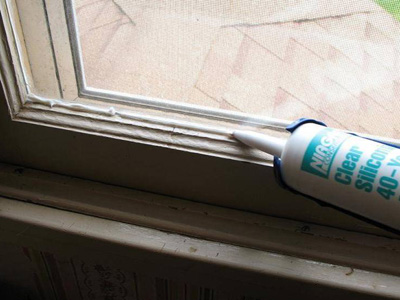
Thankfully, the previous owners installed new vinyl windows so – with strategically placed beads of silicone caulk; a fresh aluminum sweep for our front door; a handful of outlet plugs; new ceiling fan; and a furnace tune-up – we stayed relatively cool (at least on the ground floor) over the summer, warm and dry through the fall, and have thus far been able to avoid crippling energy bills. But our definition of “crippling” is far from universal.
The reality is that households with the least financial resources are the most vulnerable to severe weather. In Oregon, a disproportionate number of lower-income households occupy older homes (like mine), of which a disproportionate number are in some stage of disrepair (unlike mine) and, therefore, poorly weatherized or generally unsafe. For these households, the added expense to plan and pay for various “performance” upgrades, or simply keep their home warm and dry during the colder months and cool during the hotter ones, is unmanageable.
Thankfully, several programs do exist in Oregon to support lower-income and vulnerable households by addressing their various energy, comfort, and safety concerns:
Community Action Program (CAP) agencies receive most funds, earmarked by both government and energy utility programs, for low-income energy bill assistance and weatherization in Oregon. Oregon Department of Housing and Community Services (OHCS) contracts the direct service component of two low-income energy assistance and four weatherization programs to CAPs. The agencies also manage the direct service component of low-income bill assistance and weatherization programs for the three natural gas utilities serving Oregon customers.
Low-Income Energy Bill Assistance Programs
1. OHCS Low-Income Home Energy Assistance Program
- Federal Low-Income Home Energy Assistance Program (LIHEAP): Each year, OHCS submits a State Plan to U.S. Department of Health and Human Services to provide energy bill payment assistance to households at or below 60 percent of state median income.
- Oregon Energy Assistance Program: Funding comes from Portland General Electric (PGE) and Pacific Power (PAC) customers, and OHCS administers the program to provide electric bill payment assistance to low-income customers of those same utilities. Income eligibility is the same as LIHEAP.
2. Oregon Low-Income Gas Assistance: Gas bill payment assistance program from NW Natural, paid for by NW Natural customers. Income eligibility is the same as LIHEAP.
3. Low-Income Rate Assistance Program: Gas bill assistance grant program from Avista Utilities, paid for by Avista customers. Income eligibility is the same as LIHEAP.
4. Oregon Low Income Bill Assistance: Gas bill payment assistance program from Cascade Natural Gas, paid for by Cascade customers. Income eligibility is the same as LIHEAP.
Low-Income Weatherization and Energy Efficiency Programs
1. OHCS Low-Income Home Weatherization Assistance
- LIHEAP Weatherization (see previous description of LIHEAP).
- U.S. Department of Energy (DOE) Weatherization Assistance Program (WAP): OHCS submits a state plan to DOE each year to provide weatherization and energy conservation services to households at or below 200 percent of the federal poverty income level.
- Energy Conservation Helping Oregonians: Funding comes from PGE and PAC customers and OHCS administers the program to cover the cost of weatherization measures for PGE and PAC customers. Income eligibility is the same as WAP.
- Bonneville Power Administration: Works in conjunction with and/or as supplemental funding to DOE WAP for mostly Tribal and non-PGE and PAC customers.
2. Oregon Low Income Energy Efficiency: Customer-funded program of NW Natural to support low-income energy efficiency measures administered through CAP agencies. Income eligibility is the same as LIHEAP.
3. Community Energy Project offers weatherization workshops in the Portland-area, supporting low-income participants with training and free materials and an additional workshop instructing people how to insulate their unused attic space. “In-Home” services for low-income seniors and people with disabilities use the same materials offered in workshops and offer safety upgrades as needed (as is often the case before weatherizing).
The above resource lists do not reflect the entire universe of weatherization and energy bill assistance in Oregon, but they do cover a lot of ground. Please support your lower-income neighbors by helping to spread the word, especially as Oregon continues to experience potentially dangerous winter weather.
Editor’s note 2: this blog originally included the statement: ‘Renters, many of whom live in energy inefficient housing, tend to suffer worse effects than homeowners.’ That sentence has been removed due to insufficient supporting evidence.
To keep up with CUB, like us on Facebook and follow us on Twitter!



09/05/22 | 0 Comments | Heat Or Eat: An Unfair Proposition