
HB 2020’s Consumer Protections Highlighted at NASUCA Conference
Posted on June 25, 2019 by Janice Thompson
Tags, Energy
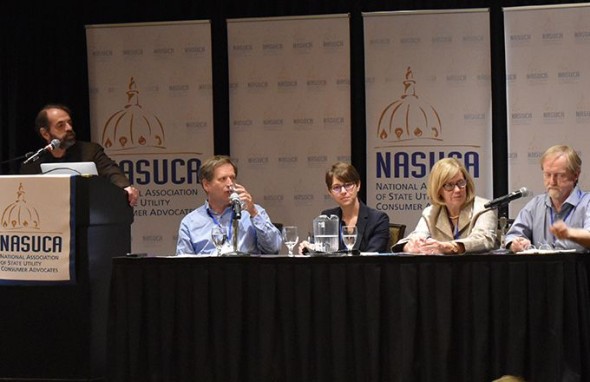
CUB’s executive director, Bob Jenks, emphasized the strong consumer protection elements of HB 2020 in two sessions on utility sector decarbonization at a recent conference in Portland. The event was hosted by the National Association of Utility Consumer Advocates (NASUCA), whose membership includes 55 utility consumer advocate agencies from across the country. Conference participants were particularly eager to learn about HB 2020’s Oregon-specific steps to ensure affordability and protect low income customers.
As Bob said in his introduction, “HB 2020 is the most pro-consumer comprehensive carbon reduction legislation that has been considered anywhere in the U.S.”
- HB 2020 provides financial assistance to low- and middle-income Oregonians for possible gasoline cost increases.
- HB 2020 ensures expanded use of renewable natural gas from sources like landfills, and protects customer bills with additional energy efficiency programs and rebates to offset some additional costs.
- HB 2020 dovetails with previously adopted mandates on our state’s major electric utilities: to remove coal from their electricity generation mix, increase renewables, and invest in energy efficiency, battery storage, and electric vehicle infrastructure. Additional decarbonization steps will be required, but HB 2020’s approach will keep electricity bills affordable. Additionally, facilitating investment in transportation electrification and affordable electricity will enable more households to purchase electric vehicles, thereby saving money on operation and maintenance costs.
Bob also highlighted how HB 2020 builds on Oregon’s historic efforts to reduce carbon emissions, particularly four decades of energy efficiency investments. Our state has achieved these efficiencies while maintaining affordability, as demonstrated by the fact that current electric bills, adjusted for inflation, are lower than they were in 1980.
As Bob told NASUCA conference participants, Oregon consumers need a comprehensive, economy-wide carbon reduction plan, with provisions to protect communities most affected by climate change such as low-income residents. That goal is achieved in HB 2020.
To keep up with CUB, like us on Facebook and follow us on Twitter!



06/25/19 | 0 Comments | HB 2020’s Consumer Protections Highlighted at NASUCA Conference