
Customer Protections Assured in NW Natural’s First Renewable Natural Gas Project
Posted on July 27, 2021 by Mike Goetz
Tags, Energy
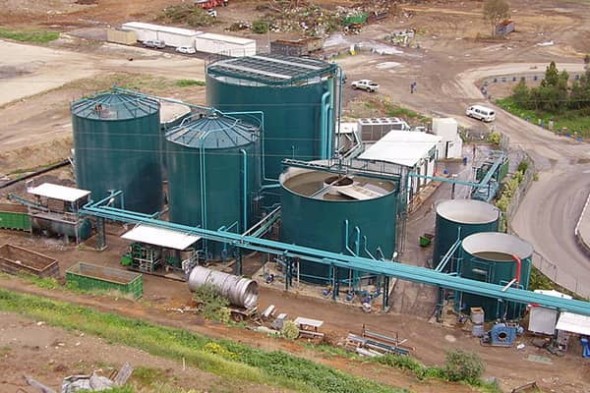
photo/image by: Wikimedia: Alex Marshall - commons.wikimedia.org/wiki/File:Anaerobic_digesters_overhead_view.jpg, CC BY-SA 2.5 - creativecommons.org/licenses/by-sa/2.5/legalcode
On June 8, 2021, the Oregon Public Utility Commission (PUC) gave NW Natural the go-ahead to launch its first renewable natural gas (RNG) project under Oregon’s first-of-its-kind RNG program. The rules governing this program were created via Senate Bill 98, passed by the Oregon Legislature in 2019. Due to uncertainty surrounding the production of the company’s RNG facility, CUB and allies advocated for strong protections to ensure customers were not exposed to costs that exceeded NW Natural’s projections. In the end, the PUC agreed. The agreement is subject to a condition that allows NW Natural to recover costs only if they are below a cost cap informed by the RNG market. This is a key customer protection because, absent a cap, NW Natural’s customers could have been exposed to high RNG costs if the facility significantly under-produced.
Speaking of the facility, NW Natural’s first foray into the RNG world is a project that will capture methane that would otherwise be released from a Tyson Fresh Meats site in Lexington, Nebraska. The natural gas captured at the site is considered “renewable” because it is already being generated from existing processes and does not require conventional fossil fuel extraction. There are environmental benefits due to avoided emissions from the processing plant. NW Natural will co-own the project with RNG developers BioCross LLC and will operate the venture under a jointly owned company called Lexington Renewable Energy, LLC.
Since NW Natural proposed to enter into a joint agreement and create an affiliated organization to manage the Lexington Project, it was required to seek approval of the agreement with the PUC. Under its authority, the PUC must determine whether the agreement will result in no harm to utility customers. When an agreement is entered into for the sale of services or supplies to the utility—as is the case here—the PUC requires that transactions be conducted at either the true cost or the market rate, whichever is lower. Through this lens, the PUC approved the transaction, but put the cost cap in place to ensure customers were not harmed.
This is NW Natural’s first step toward meeting the goals set by Senate Bill 98. That law allows for a gradual increase to a 30 percent RNG target by 2050. As the company continues to make investments to meet this goal, CUB will continue to scrutinize them to ensure that NW Natural is making the right investments that maximize RNG’s environmental benefits while being affordable to customers. Meanwhile, as CUB recently detailed on our Blog, the PUC has opened an investigation into the future of natural gas in Oregon. One big question CUB will be paying close attention to is the role of RNG in meeting state decarbonization goals and mandates, and to what extent it would be more cost effective to electrify use cases that natural gas currently serves.
There are big policy questions in play with the rollout of Oregon’s RNG program that will significantly impact both customers and the environment. CUB will stay at the table, as always, to help ensure the best possible outcome for Oregon utility customers and the environment they inhabit.

To keep up with CUB, like us on Facebook and follow us on Twitter!



08/18/21 | 0 Comments | Customer Protections Assured in NW Natural’s First Renewable Natural Gas Project