
CUB, Stakeholders Reach Agreement in PacifiCorp Cost Allocation Methodology
Posted on December 12, 2019 by Mike Goetz
Tags, Energy
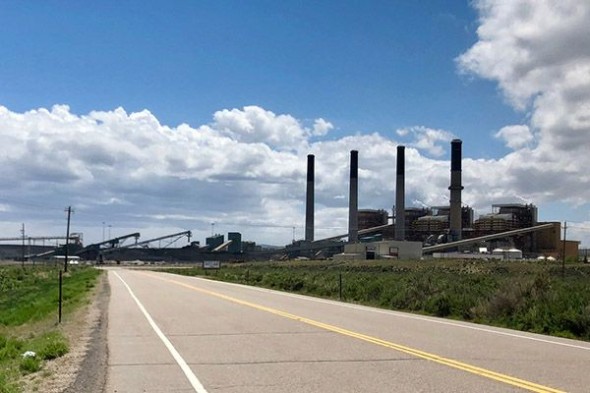
PacifiCorp is a unique entity. While most utilities that we work with at CUB have service territories limited to Oregon, or spanning a few states, PacifiCorp serves customers in six large states across the West. On the western side of its system, the Warren Buffet-led company serves customers in Washington, Oregon, and California under the name Pacific Power. Heading one time zone east, the company does business as Rocky Mountain Power in the intermountain states of Idaho, Wyoming, and Utah. The six western states that PacifiCorp serves are as diverse in energy policy as they are in geographic landscapes. This makes serving all six states with a common portfolio of resources no small task for the large utility.
The west coast Pacific Power states have steadily passed legislation and progressive energy policy with an eye toward phasing out coal plants and cleaning up the generating resource mix. In Oregon, 2016’s SB 1547 mandates that Oregon customers cease paying for electricity generated from coal-fired power plants by 2030. Similar initiatives, such as Washington’s Clean Energy Transformation Act, are continuing to shape energy policy along the western seaboard. Conversely, states in the Rocky Mountain Power service territory have viewed coal-fired generation as a means to get cheap electricity and keep local jobs in place in areas like Wyoming’s Powder River Basin. The Pacific Power states question the economic risk to customers from coal, and generally assume that the useful lives of coal plants will end over the next few decades. Ten years ago, the Rocky Mountain states extended the operating lives of many coal plants into the 2040s.
This dichotomy sets the stage for the challenge of PacifiCorp’s Multi-State Process (MSP) that CUB has been engaged in for almost two decades. Broadly speaking, the MSP is a series of cost allocation methodologies that seek to equitably share the costs of PacifiCorp’s system between the six states in which it operates. The result has been a series of protocols that govern how these costs are shared. For the most part, costs have been apportioned to each state based on the demand to the total system that each state drives. For example, Oregon currently makes up approximately 25 percent of PacifiCorp’s system, in terms of energy demand, and thus is responsible for 25 percent of the costs.
However, the aforementioned divergent energy policies have made this exercise more complicated. Pursuant to SB 1547, Oregon cannot pay for either current or future-built coal resources after 2030. However, in 2018, about 58 percent of PacifiCorp’s system was comprised of coal-fired resources. Negotiations regarding how to allocate and assign costs for the remaining coal resources on PacifiCorp’s system were central to this most recent MSP protocol. While this was a complicated and time-intensive process, we were able to finalize an agreement after extensive negotiations. That agreement, the 2020 Protocol, was filed on December 3, 2019.
The 2020 Protocol was developed through significant collaboration with more than 35 organizations from six states. It establishes an overarching approach to resolving cost allocation for all six states during an interim period (2020-2023), as well as a process to resolve remaining allocation issues on a more permanent basis. The protocol provides a structure to allow the transition from a common set of generating resources serving all states to a future where states can diverge and use different generating resources.
Under the new agreement, pursuant to SB 1547, Oregon can establish exit dates to get out of paying for a given coal resource before 2030. Other states will then have a choice: they can pick up Oregon’s share of the plant, or they can join us and close the plant. There is an incentive for other states to join Oregon and close a plant because Oregon would then be responsible for the entirety of its share of decommissioning - i.e. environmental remediation and cleanup - costs. If a coal plant continues to operate after Oregon has stopped paying for it, Oregon would only pay a set amount of decommissioning costs based on its share of estimated decommissioning costs when it leaves the plant. In short, the 2020 Protocol allows for Oregon to phase out the use of coal, while other states get to decide whether they want to take on the economic risk associated with picking up Oregon’s share of the coal plants, or join Oregon and close the plants. (Note that the same scenario could be initiated by any state that has similarly elected to proactively remove coal from its energy mix.)
The 2020 Protocol will now go before the Oregon Public Utility Commission and equivalent regulatory agencies in other states for approval. Assuming all six states agree, negotiations will continue in order to iron out remaining details. The process leading to the 2020 Protocol was long and arduous, but CUB would like to applaud PacifiCorp and all stakeholders for coming to the table and negotiating in good faith to come to an equitable agreement.
To keep up with CUB, like us on Facebook and follow us on Twitter!



12/18/19 | 0 Comments | CUB, Stakeholders Reach Agreement in PacifiCorp Cost Allocation Methodology