
CUB Advocates for Smart, Ratepayer-Friendly Policy in EV Dockets
Posted on January 3, 2018 by Mike Goetz
Tags, Energy
The world of utility regulation is constantly changing, and utilities are beginning to explore investments in different resources and technologies to meet customer demand and comply with state policy mandates. A big part of the change to the regulatory landscape in Oregon over the past two years has been the implementation of SB 1547, the Clean Electricity and Coal Transition Plan. If you recall, CUB was a key supporter of the bill along with several utilities and stakeholders. While the bill centered on removing coal power in Oregon by 2035 and doubling the state’s renewable portfolio standard (RPS) by 2040, several provisions required earlier action from the utilities.
Section 20 of SB 1547 directed PGE and Pacific Power to file applications for transportation electrification programs by December 31, 2016. While over a year of litigation has occurred since these programs were filed, final decisions from the Oregon Public Utility Commission (PUC) are looming. The utilities included a number of smaller, less capital intensive pilot programs in their applications, ranging from PGE partnering with TriMet to develop electric bus charging infrastructure, to outreach and education for customers, to utility-owned and constructed public electric vehicle charging stations across each utility’s service territory. Throughout the process, in both PGE and Pacific Power’s applications, CUB advocated for policies to limit rate impact to customers while allowing the influx of electric vehicles coming to Oregon to benefit the utility’s system.
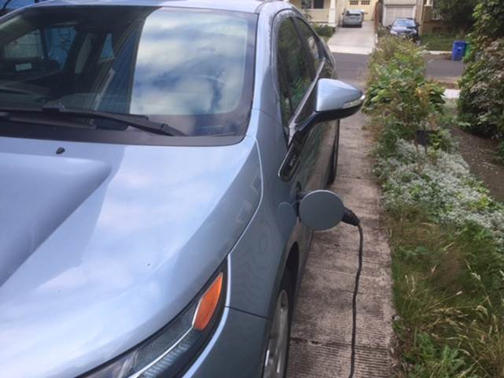
Electric vehicles are primarily charged at individual residences; this has the potential to add significant energy demands to the system. These demands can cause harm to the utility’s system and create higher rates if many electric vehicle owners charge their cars at the same time, during on-peak hours. This causes the utility to have to purchase energy on open markets, which can be costly. Conversely, if electric vehicles are charged during off-peak hours, the fixed costs of the distribution system are spread more thinly, which can create downward pressure on rates. Charging electric vehicles during low demand, nighttime hours can also help integrate renewables into the grid—such as wind in the Columbia River Gorge that blows mostly at night. In short, electric vehicles can either provide a benefit or harm to the utility’s system and its customers.
CUB was successful in advocating for policies that will help both customers and the utility’s system during the litigation phase of both proceedings. CUB was able to reach settlement with the parties in each case on a set of small pilot programs that will help the utilities learn how incoming electric vehicles will affect their system. However, the settlements in both PGE’s and Pacific Power’s applications were challenged by ChargePoint, Inc., a private manufacturer of electric vehicle charging equipment. ChargePoint argued that utility ownership of charging infrastructure cuts against the intent of SB 1547, and instead proposed that utilities subsidize privately owned charging stations. CUB, along with all other parties, countered this argument. CUB believes that utility ownership of charging infrastructure is an acceptable model that can help the utility know more about how charging impacts its system. CUB’s legal brief in the PGE case can be found here.
CUB is hesitant to see ratepayer money go towards subsidizing a private actor’s individualized interests in the nascent electric vehicle market. While parties are still awaiting a PUC decision, CUB is confident that its advocacy has helped shape the utilities’ applications to protect ratepayers and positively impact the utilities’ systems. Electric vehicles have the potential to add remarkable flexibility to the electric grid, and it is an exciting time to be involved in shaping the future of EVs in the state.
Stay tuned for more regulatory updates from CUB!
To keep up with CUB, like us on Facebook and follow us on Twitter!



01/03/18 | 0 Comments | CUB Advocates for Smart, Ratepayer-Friendly Policy in EV Dockets