
2021 Snowpack Update: Dry Months Strain Supply, Outlook Still Positive
Posted on June 11, 2021 by Jackie Dewart
Tags, Energy
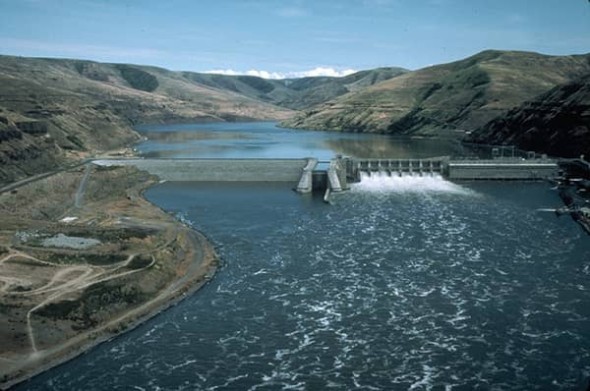
The Columbia River Basin is host to over one third of total US hydropower generation. Hydropower is generated when water from a river flows through a dam, where the falling water turns a turbine which generates electricity. The amount of hydropower produced depends on the amount of water flowing through dams throughout the year. The overall water supply depends on both the amount of precipitation and the snowpack, because while rain feeds the river during the winter and spring, in summer we depend on water that flows from melting snow and ice.
Snowpack is an important source of hydropower for the American West during the summer months, but the amount of water from the snowpack varies from year to year. The snowpack is especially important for storing potential energy in the mountains that feed into reservoirs as they melt. The more water that is locked up as snow in the mountains, the more will be released later into the spring and summer to help meet peak electricity needs. The streamflow from snowpack into river basins depends on the amount of snow in the snowpack and the rate at which it melts. Rising temperatures mean more rain and less snow and will also cause snowpack to melt earlier in the year. This results in greater water supply in the spring and less in the late summer.
The Columbia River is the largest river in the Pacific Northwest and is fed by tributaries starting as far away as Montana, Wyoming, and British Columbia. This means that the waterflow in the Columbia, and the resulting hydropower, is affected by the snowpack accumulated across this broad region. March, April, and May 2021 have been extremely dry months for much of the Columbia River Basin – the majority of that region has received less than 50 percent of normal precipitation levels over this period. Fortunately, the snowpack that feeds the Upper Columbia Basin was at 108 percent of average as of April 1. The above average snowpack is thanks mostly to a snowy winter in British Columbia.
Overall, while the Snake River Basin and Lower Columbia Basin look to be very dry this year, the melting snow from British Columbia should help offset some of that impact on the Columbia and its hydro output. While the Snake River’s Lower Granite Dam is forecasted to have only 70 percent of its normal water supply this year, the forecast for the Dalles Dam, which is used to gauge the overall water supply in the Columbia Basin because of its location near the mouth of the Columbia River, is somewhat better. The Dalles Dam is forecasted to have 84 percent of average water supply for April-September, making this a “low water year” for the Columbia.
We will continue to monitor the state of the Columbia Basin hydroelectric system throughout the summer months. Our region’s hydroelectric system helps ensure that customers in Oregon enjoy some of the lowest cost electricity in the nation. In low water and low snowpack years, prices may go up as utilities are forced to dispatch higher cost electricity and are less able to sell excess hydroelectric generation into markets to offset system costs. Despite much lower than average precipitation this spring, we are hopeful that the robust snowpack throughout the region will help ensure that our hydroelectric supply remains strong throughout 2021.

To keep up with CUB, like us on Facebook and follow us on Twitter!



08/18/21 | 0 Comments | 2021 Snowpack Update: Dry Months Strain Supply, Outlook Still Positive