Energy Policy for the People
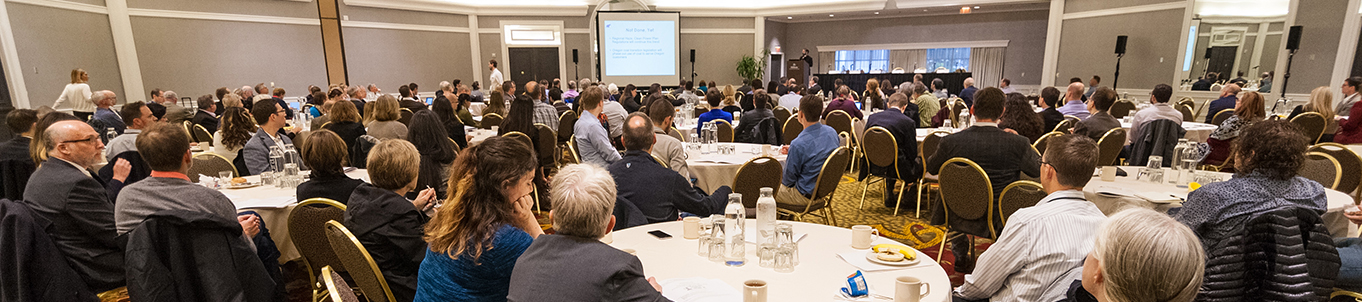
12th Annual CUB Energy Policy Conference: 8am-5pm on Friday October 14, 2022!
Energy Policy for the People
The days of top-down energy policy are over. Oregon’s 100% Clean Electricity law and other major pieces of legislation passed in recent years have been led and developed by grassroots communities. Increasingly, community voices are showing up and seeking more pathways to get involved. But it’s clear that more needs to be done.
How do we make the regulatory process more inclusive, equitable, and accessible to communities and customers? What historic and systemic barriers need to be overcome to achieve these goals? How do utilities identify and address the concerns of the communities they serve? How do we evaluate community assets as well as hidden inequities in the energy system? What will it take to include energy justice and center human needs in the conversation?
About the CUB Energy Policy Conference
The CUB Energy Policy Conference is designed as a day of discussion, networking, and sharing diverse perspectives. This conference is ideal for community groups, regulators, advocates, utility representatives, attorneys, or those interested in our region’s energy industry.
Missed this year’s conference? You can stay up-to-date about the CUB Conference by joining our email list (select “Policy Conference” in the form under Email Lists) and by following CUB Conference news on Twitter at #CUBCon22 or @OregonCUB.
Conference Agenda
- 7:45am - 8:30am: Registration and Check-In
- 8:30am -9:00am: Opening Remarks and Presentation
Columbia Falls Ballroom
Speaker: Bob Jenks - Executive Director, Oregon CUB- 9:00am - 10:25am: Opening Panel: The View on the Ground: A Conversation with Community Advocates
Columbia Falls Ballroom
Our opening panel will convene grassroots community organizers and advocates to discuss their thoughts on energy policy for the people. Recent CUB conferences have begun with a panel of utility Executives discussing their views on key energy issues. Nothing personal, but they have had their chance. This year, we will focus on centering communities.
What strengths and assets do advocates see communities bringing to the table? Where are they seeing good examples of community voices developing energy policy? How can we overcome the historical barriers to participation and develop energy systems that are designed by and for communities?
Moderator: Bob Jenks - Executive Director, Oregon CUB
Panelists:
- Elaine Harvey - Environmental Coordinator, Yakama Nation Fisheries
- Knowledge Murphy - Sustainability Coordinator, Multnomah County Office of Sustainability
- Rebecca Descombes - Inupiaq, Community Advocate and Organizer
- Simone Crowe - Oregon Green New Deal Policy Organizer, Oregon Just Transition Alliance
- 10:25am - 10:40m: Break
- 10:40am - 12:05pm: Breakout session 1
Panel 1: Reflecting Community Needs in Utility Regulation
Willamette Falls BallroomHow do utilities and other stakeholders gather information and act on customers’ needs, challenges, and priorities? How do we prioritize where to allocate the benefits of new projects? (For example: deciding where to place a new microgrid project and what community assets to target?) How should utilities go beyond their existing methods to evaluate community needs?
Moderator: Kate Ayres - Policy Advocate, Oregon CUB
Panelists:
- Maria Dolores Torres - Member of Climate Justice and Action Task Force, Adelante Mujeres
- Jaimes Valdez - Org. Development & Policy Manager, Portland Clean Energy Fund
- Ezell Watson - Director - Diversity, Equity, and Inclusion, Oregon Public Utility Commission
- Shawn Bonfield - Senior Manager of Regulatory Policy and Strategy, Avista
Panel 2: Community-Based Energy Projects
Columbia Falls BallroomWhat is happening in community-based energy projects today? What are we learning from what communities are doing? What stories of innovation, effective movement building, and collaboration should we be paying attention to? How are communities working together to improve customers’ lives and overcome financial barriers?
Moderator: Sudeshna Pal - Economist
Panelists:
- Isaiah Kamrar - Program Manager, African American Alliance for Home Ownership
- Charity Fain - Executive Director, Community Energy Project
- Kat Brigham - Chair, Board of Trustees for the Confederated Tribes of the Umatilla Indian Reservation
- Jed Jorgensen - Advisor - Infrastructure, Pacific Northwest National Laboratory
- 12:05am - 12:35pm: Networking Break
- 12:35pm - 1:40pm: Lunch and Keynote Address
Columbia Falls Ballroom
Keynote Speaker: Oriana Magnera - Energy, Climate, and Transportation Program Manager, Verde
Least Cost/Least Risk Won’t Power The Future
Utility planning and programs are developed through a least cost/least risk model. This approach puts risk and burden on environmental justice communities, especially low-income Black, Indigenous, Latin/x/e, Asian, Pacific Islander, and other People of Color communities. As we look to a cleaner and more resilient energy future, business as usual will continue substantial harm. Justice is only possible if we operate under an assumption of abundance instead of scarcity. There is enough to go around, but many systems, like energy, instead value competition that stacks the deck for only a few winners. To build a more just energy system, we must change our mindset to be more collaborative and creative. Moving from a least cost/least risk model to one that prioritizes benefits to marginalized communities is the first step. Our challenge is to redistribute and repower our grid in ways that are abundant and regenerative.- 1:40pm - 1:55pm: Break
- 1:55pm - 3:20pm: Breakout session 2
Panel 1: Navigating Utility Regulation and the PUC
Willamette Falls BallroomAs more stakeholders continue to engage in Oregon’s utility space, there is a clear need for knowledge sharing on how to navigate the regulatory process. What are the best practices for effective engagement at the Public Utility Commission? How should parties approach settlement conferences, workshops, and other forums? How do parties approach negotiations? When should a party decide to engage in a contested case proceeding? How are rulemaking proceedings conducted? This panel will explore practical lessons for engagement in various processes from a diverse range of advocates and decision makers.
Moderator: Mike Goetz - General Counsel, Oregon CUB
Panelists:
- Silvia Tanner - Senior Energy Policy and Legal Analyst, Multnomah County Office of Sustainability
- Carra Sahler - Staff Attorney, Green Energy Institute, Lewis & Clark Law School
- Nolan Moser - Chief Administrative Law Judge, Oregon Public Utility Commission
- Tonia Moro - Attorney at Law
Panel 2: Rates, Affordability, and Community Investments
Columbia Falls BallroomA diverse coalition of communities successfully came together to pass the landmark Energy Affordability Act in 2021. But already, the savings built into that legislation have nearly been overtaken by rate increases. How do we address energy burdens in the context of rising rates, deposits, and other costs? How do we ensure that energy-burdened customers can afford energy efficiency investments? Resilience, community projects, and wildfire system repair all carry price tags. How do we prioritize what utilities are spending money on?
Moderator: Jennifer Hill-Hart - Policy Manager, Oregon CUB
Panelists:
- Benedikt Springer - Utility Policy Coordinator, Community Action Partnership of Oregon
- Michelle Scala - Energy Justice Program Manager, Oregon Public Utility Commission
- Hannah Cruz - Senior Stakeholder Relations and Policy Manager, Energy Trust of Oregon
- Oriana Magnera - Energy, Climate, and Transportation Manager, Verde
- Greer Ryan - Oregon Clean Buildings Policy Manager, Climate Solutions
- 3:20pm - 3:35pm: Break
- 3:35pm - 4:05pm: Consumer Champion Award Ceremony
Columbia Falls Ballroom
Honoree and Speaker: Silvia Tanner - Senior Energy Policy and Legal Analyst, Multnomah County Office of Sustainability
Silvia Tanner is a Senior Energy Policy and Legal Analyst at Multnomah County’s Office of Sustainability, where she leads the County’s efforts to catalyze a just energy transition. Silvia started in utility regulation in 2012 as a law clerk for the Citizens Utility Board. She spent years working to advance clean energy through policy and regulatory advocacy at federal agencies and state utility commissions throughout the Pacific Northwest. At Multnomah County, Silvia combines that expertise with her lived experience and all she learns from other community leaders and advocates to advance an energy transition that lifts up, rather than penalizes, vulnerable populations.
A proud Latina and immigrant from Colombia, Silvia has a rich history of service to community. She works to improve the experience of people from systemically excluded backgrounds in the legal and environmental fields through her service on various boards and her enthusiastic mentorship of students and professionals of color. She also serves in the Oregon Department of Energy’s Energy Advisory Workgroup, the Energy Trust of Oregon’s Board of Directors, and the Black and Brown Parents Advisory Council at her son’s school. Silvia holds a JD from Lewis and Clark Law School and a BA in Economics from Portland State University. She is happiest being with her family, dancing, cooking, and running.- 4:05pm - 4:30pm: Closing Remarks
Columbia Falls Ballroom
Speaker: Bob Jenks - Executive Director, Oregon CUB
- 4:30pm - 5:30pm: Hosted Reception
Consumer Champion Award
Silvia Tanner

CUB is pleased to announce Silvia Tanner as our 2022 Consumer Champion.
Silvia Tanner is a Senior Energy Policy and Legal Analyst at Multnomah County’s Office of Sustainability, where she leads the County’s efforts to catalyze a just energy transition. Silvia started in utility regulation in 2012 as a law clerk for the Citizens Utility Board. She spent years working to advance clean energy through policy and regulatory advocacy at federal agencies and state utility commissions through the Pacific Northwest. At Multnomah County, Silvia combines that expertise with her lived experience and all she learns from other community leaders and advocates to advance an energy transition that lifts up, rather than penalizes, vulnerable populations.
A proud Latina and immigrant from Colombia, Silvia has a rich history of service to community. She works to improve the experience of people from systemically excluded backgrounds in the legal and environmental fields through her service in various boards and her enthusiastic mentorship of students and professionals of color. She also serves in the Oregon Department of Energy’s Energy Advisory Workgroup, the Energy Trust of Oregon’s Board of Directors, and the Black and Brown Parents Advisory Council at her son’s school. Silvia holds a JD from Lewis and Clark Law School and a BA in Economics from Portland State University. She is happiest being with her family, dancing, cooking, and running.
Speaker and Panelist Bios
Ezell Watson
Director of Diversity, Equity, and Inclusion, Oregon Public Utility Commission

Ezell Watson III is a leader in the field of Diversity Equity and Inclusion (DEI), i.e. social justice, and an advocate for human rights, specifically the rights of Oregonians. He currently serves as the Program Director of Diversity Equity and Inclusion for the Oregon Public Utility Commission. Mr. Watson brings a wealth of experience to his role including 10 years of experience in the wireless communication sector and 10 years as a DEI professional. As a social justice champion, Mr. Watson led equity efforts within the Portland Public Schools’ offices of Community Engagement, including the renaming process of the now Ida Bae Wells Barnett High School, formerly Woodrow Wilson High School. He also played an integral role in developing and enhancing the school district’s five year equity plan. Mr. Watson believes wholeheartedly in the goodness of humanity and seeks to “Promote smiles and happiness in the atmosphere,” anytime he engages in ANY endeavor.
Jaimes Valdez
Org. Development & Policy Manager, Portland Clean Energy Fund
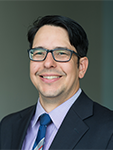
Jaimes Valdez works for the City of Portland Bureau of Planning and Sustainability, implementing the Portland Clean Energy Fund focused on addressing climate action that advances racial and social justice. Before this position, Jaimes worked for Spark Northwest, where he advocated for regulatory, market, and legislative policy changes towards a vision of communities powered by affordable, locally-controlled clean energy. He has more than 15 years of experience in energy issues and community-building, including in project development, energy planning, utility marketing, and public advocacy toward an equitable, clean energy economy. In 2012, he spent a year as a Robert Bosh Fellow in Germany researching cooperatively-funded renewable development, community energy planning, and distributed energy integration. He holds a bachelor’s degree in physics and environmental studies from Whitman College
Maria Dolores Torres
Member of Climate Justice and Action Task Force, Adelante Mujeres
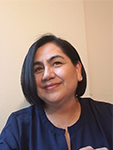
My pronouns are (She/Her) I am the mother of 3 children (all married). I have lived in Washington County for over 27 years and enjoy spending my free time with family and
supporting my community. I have been working with the non-profit organization Adelante Mujeres, as Advocacy and Outreach Coordinator for two years, That I see as my retirement and passion.
“I always appreciate the opportunity to serve others.”
Mis pronombres son (Ella/). Soy madre de 3 hijos (todos casados). Vivo en el condado de Washington por más de 27 años y mi tiempo libre lo disfruto pasando con la familia y apoyando a mi comunidad. Trabajo con la organización sin fines de lucro Adelante Mujeres, como coordinadora de abogacía y difusión desde hace dos años, algo que veo como mi retiro y pasión.
“Agradezco siempre la oportunidad de servir a los demás.”
Silvia Tanner
Senior Energy Policy and Legal Analyst, Multnomah County Office of Sustainability
Silvia Tanner is a Senior Energy Policy and Legal Analyst at Multnomah County’s Office of Sustainability, where she leads the County’s efforts to catalyze a just energy transition. Silvia started in utility regulation in 2012 as a law clerk for the Citizens Utility Board. She spent years working to advance clean energy through policy and regulatory advocacy at federal agencies and state utility commissions throughout the Pacific Northwest. At Multnomah County, Silvia combines that expertise with her lived experience and all she learns from other community leaders and advocates to advance an energy transition that lifts up, rather than penalizes, vulnerable populations.
A proud Latina and immigrant from Colombia, Silvia has a rich history of service to community. She works to improve the experience of people from systemically excluded backgrounds in the legal and environmental fields through her service on various boards and her enthusiastic mentorship of students and professionals of color. She also serves in the Oregon Department of Energy’s Energy Advisory Workgroup, the Energy Trust of Oregon’s Board of Directors, and the Black and Brown Parents Advisory Council at her son’s school. Silvia holds a JD from Lewis and Clark Law School and a BA in Economics from Portland State University. She is happiest being with her family, dancing, cooking, and running.
Benedikt Springer
Utility Policy Coordinator, Community Action Partnership of Oregon

Benedikt Springer is a Utility Policy Analyst with the Community Action Partnership of Oregon. In that role, he advocates for and strives to improve the low-income energy assistance and weatherization programs offered by Oregon’s network of 18 community action agencies. Previously, he was a post-doctoral scholar at the Morrison Institute for Public Policy (Arizona State University), conducting research on issues related to housing and homelessness. While originally from Germany, Benedikt holds a Ph.D. in political science from the University of Oregon.
Michelle Scala
Energy Justice Program Manager, Oregon Public Utility Commission
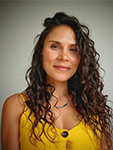
Michelle Scala is currently the Energy Justice Program Manager at the Oregon Public Utility Commission, which she joined in 2020. She received BAs in Economics and Political Science from the University of Hawaii at Manoa in 2007 and has since advised government leaders on issues of public assistance, social justice, equity, and community resilience for over a decade. In her role at the Commission’s Strategy Integration Division, Michelle’s work focuses on promoting equitable and just energy policy from a regulatory standpoint. Most recently, Michelle was made lead on the Commission’s efforts to reduce energy burden in Oregon through the investigation and implementation of the Energy Affordability Act across the state’s six regulated energy utilities.
Carra Sahler
Staff Attorney, Green Energy Institute, Lewis & Clark Law School
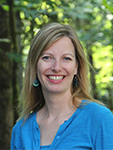
Carra is a staff attorney with the Green Energy Institute at Lewis & Clark Law School. Since joining GEI in the fall of 2020, Carra has focused on regulatory proceedings at the Oregon Public Utility Commission, most recently representing environmental advocates and community based organizations intervening in a gas utility’s rate case to press issues related to risks associated with expansion of the gas system. She is also supporting local governments investigating options to decarbonize their buildings. Carra brings to GEI extensive research and writing experience, from her dozen years as a career law clerk at the U.S. District Court, District of Oregon, as well as from advising clients in a private law firm setting in the areas of municipal and environmental law. Carra is a magna cum laude graduate of Lewis & Clark Law School, where she concentrated her coursework in environmental and natural resources law. She earned her BA from Smith College in Northampton, MA, but was born and raised in the foothills outside of Denver, CO.
Greer Ryan
Oregon Clean Buildings Policy Manager, Climate Solutions
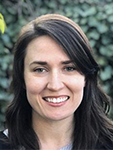
Greer is the Clean Buildings Policy Manager at Climate Solutions, where she works to advance policies that will drive a rapid and just transition to climate-friendly and healthy buildings for all. Prior to joining Climate Solutions, Greer was a Senior Energy Policy Analyst at the Center for Biological Diversity. In this role, she worked on various energy justice policy issues, including reducing barriers to distributed solar, ensuring consumer protections from utility shutoffs, and increasing transparency and accountability of utility influence spending. Greer holds an M.S. in Environmental Science from Indiana University and a B.S. in Molecular Environmental Biology from UC Berkeley.
Sudeshna Pal
Former Economist at CUB

Sudeshna recently transitioned out of CUB to work for the Oregon Public Utility Commission. Prior to joining the energy sector, she spent several years working as Assistant Professor of Economics at Georgia College and State University and is currently Adjunct Faculty at Portland State University, Economics Department. Sudeshna earned her Ph.D. in Economics from West Virginia University. She spent more than three years in CUB and was the lead analyst on utility resource plans.
In her spare time she loves to read, and spend time with her family. She loves traveling and is an ardent Zumba fan. Sudeshna is actively involved in community work and teaches Bengali to children from the Bengali community of Greater Portland.
Knowledge Murphy
Sustainability Coordinator, Multnomah County Office of Sustainability

Knowledge Murphy is a solar energy consultant, energy efficiency consultant, Master Watershed Steward, content creator, and an environmental justice advocate. He is the owner & CEO of Black Man, Green Plan LLC, a consulting company & multimedia brand which focuses on informing people about renewable energy, energy efficiency, sustainability, & most importantly, environmental justice. He has worked in solar, green infrastructure, sustainability, entrepreneur, and as an instructor/facilitator.
Nolan Moser
Chief Administrative Law Judge, Oregon Public Utility Commission

Nolan Moser is the Chief Administrative Law Judge for the Oregon Public Utility Commission. In that capacity, he is responsible for the management of the Commission’s Administrative Hearings Division, which handles Commission decision making process and facilities stakeholder engagement in Commission decisions. Prior to serving as Chief ALJ, Nolan acted as an ALJ trying energy, telecom, and water proceedings at the Commission and was a Staff Analyst in the Energy Resources and Policy division of the agency. Nolan has practiced in front of utility Commissions representing environmental, clean energy, and utility interests. Over the past two years, Nolan has worked to make Commission processes more accessible to groups and advocates new to the Commission and has hosted a variety of trainings and conversations with advocates regarding practice at the Commission.
Tonia Moro
Attorney at Law
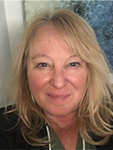
Tonia began her practice in Southern Oregon in 1990 after completing environmental law studies at Lewis and Clark. She began practicing in Medford, focusing on land use, primarily representing several local governments in the 90s. In 1993, she joined the federal Criminal Justice Act Panel, and later the Federal Public Defender’s office soon after it opened in Medford, emphasizing federal criminal defense trial, appeal, and habeas corpus work, which provided an unusual opportunity to appear regularly before the 9th Circuit Court of Appeals. In 2013, as a founding board member, she helped organize Rogue Climate which opposed the Jordan Cove/Pacific Connector project. In opposition to that project, she also represented landowners and other community groups in over 10 land use cases, two proceedings before the Oregon Energy Facility Siting Commission (including a contested case) and the Federal Regulatory Energy Commission (FERC) proceedings. She was awarded the Oregon State Bar President’s Public Service award in 2020, related to that work. She is currently engaged in matters at FERC, the PUC, and in energy-related land use matters, helping to satisfy a sense of duty to subsequent generations.
Oriana Magnera
Energy, Climate, and Transportation Program Manager, Verde

As Verde’s Energy and Climate Policy Coordinator, Oriana (she/her) leads Verde’s work on energy and climate policy. Her focus is community-led, participatory policy and program development. For fun, Oriana sits on the Oregon Global Warming Commission, the Portland Planning and Sustainability Commission, and spends time adventuring with her three dogs.
Isaiah Kamrar
Program Manager, African American Alliance for Home Ownership

Isaiah Kamrar currently serves as the Program Manager at African American Alliance for Homeownership (AAAH) and he currently leads the Power to the People PDX™, Home Retention, and annual programs at AAAH. Isaiah’s programs provide education to BIPOC homeowners and implement repair, weatherization, energy efficiency, and solar projects for underserved homeowners in Portland, Oregon. His background in economics, property management, and community leadership enables him to tackle environmental and racial justice challenges through adaptive program design, collaborative partnerships, and ongoing grant development.
Jed Jorgensen
Advisor – Electricity Infrastructure, Pacific Northwest National Laboratory

Jed joined the Pacific Northwest National Laboratory in August 2022 as an Advisor within the Electricity Infrastructure and Buildings Division. Prior to PNNL, Jed worked with both Farmers Conservation Alliance and Energy Trust of Oregon, supporting the founding and development of the organizations’ Irrigation Modernization work and leading the creation of strategies to support the planning, design, and installation of large-scale irrigation infrastructure projects, with benefits that support agriculture, the environment, and rural communities. In addition, Jed has worked to optimize and integrate renewable energy and energy efficiency opportunities into irrigation upgrades to reduce costs and create revenue streams that can accelerate modernization. Jed brings 14 years of experience in facilitating the development of a wide variety of renewable energy technologies at community scales, including deep expertise with in-conduit hydroelectric projects and energy policy. Prior to shifting his focus to renewable energy and irrigation modernization, Jed cut his teeth with six years of work in electoral politics, supporting local, state, and federal candidates in Oregon and Arizona.
Bob Jenks
Executive Director, Oregon CUB

Bob Jenks is the Executive Director of CUB. Bob started working for CUB in 1991, and has participated in nearly every major Oregon Public Utility Commission case since that time, including dozens of cases dealing with utility mergers, rates, resource planning, and climate change. He also regularly represents ratepayers before the Oregon Legislature and at regional forums.
Bob is the Oregon representative of the National Association of State Utility Consumer Advocates (NASUCA). He is a native Oregonian, and holds a degree in economics from Willamette University. When not working, Bob enjoys gardening, cooking, and smoking his homegrown tomatoes in his smoker.
Jennifer Hill-Hart
Policy Manager, Oregon CUB
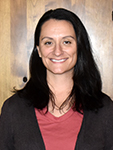
Jennifer joined CUB as Policy Manager in January 2022. She represents CUB in the development and implementation of law and policies that protect consumers and promote equity and fairness as Oregon transitions to a clean energy economy. Jennifer coordinates the development of CUB’s legislative policy positions, oversees CUB’s policy work with administrative agencies, and works with community organizations to support clean, equitable, and affordable energy policies.
Elaine Harvey
Environmental Coordinator, Yakama Nation Fisheries
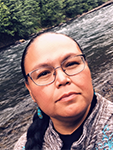
Elaine Harvey has worked for Yakama Nation Fisheries since 2006 and currently serves as the Environmental Coordinator. Elaine is also a member of the Kahmiltpa (Rock Creek) Band of the Yakama. She was the manager for the Rock Creek Fish and Habitat Project for 13 years and served as the Hydro Systems Oversight Coordinator for one year. She is also a Columbia River Intertribal Fisheries Commissioner for the Yakama Nation and serves as an Executive Board member for the Columbia Land Trust.
Elaine dedicates her career to conserving and enhancing the First Foods for the Yakama Nation. Her work includes enhancing streams for all native aquatic resources in many streams, riparian corridors, and wetlands in the streams in the Rock Creek, Klickitat, White Salmon, and Yakima drainages. She also works with national forests to protect and enhance huckleberry habitats in the various huckleberry fields utilized by the Yakama Nation. Elaine works with her tribal departments to improve root gathering areas for tribal members on the Yakama reservation. Elaine has been bringing awareness to the public that this new Green Energy Movement in the Northwest has the potential to make irreversible negative impacts to the Yakama Nation’s natural and cultural resources. She proposes that the Tribes should be involved at the earliest stages possible which include siting and planning processes of industrial energy and transmission projects. She also is dedicated to sharing her traditional knowledge with the younger generations of the Yakama Nation.
Mike Goetz
General Counsel, Oregon CUB
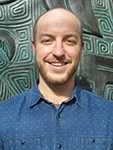
As CUB’s General Counsel, Mike is responsible for analyzing all legal issues that arise in the regulatory and organizational arenas, and works closely with CUB’s regulatory staff in doing so. In his practice, Mike works on energy and telecommunications law and policy on behalf of residential Oregonians in proceedings before the Oregon Public Utility Commission, state, and federal courts.
Mike attended the University Of Oregon School Of Law, graduating with a J.D. and a certificate of completion in Environmental and Natural Resources Law. He is a member of the Oregon State Bar, and serves as Chair of the OSB’s Energy, Telecom, and Utilities Section. In addition, Mike serves on the Board of Directors of Renewable Northwest and is the Oregon caucus chair of the NW Energy Coalition.
Charity Fain
Executive Director, Community Energy Project

Charity Fain has over 25 years of experience building stronger communities in the US and around the world. As the Executive Director of the Community Energy Project (CEP), Charity is responsible for the overall direction, leadership and management of the organization to fulfill our mission that everyone deserves a safe, healthy and efficient home, regardless of income. In this effort, she designs programs that provide free home services focused on safety, health, and energy efficiency for low-income Oregonians. Charity also leads CEP’s advocacy efforts at the city and state level to push for climate and energy justice. Prior to CEP, Charity’s professional experience focused on increasing civil engagement and political participation around the world. She has a BA in International Relations from The American University with a minor in Russian language.
Rebecca Descombes
Inupiaq, Community Advocate and Organizer
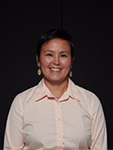
My name is Rebecca Descombes. I am Inupiaq, originally from Utqiagvik, Alaska (formally known as Barrow, Alaska). I have lived here in the Portland Metro area for 13 years. I graduated from Portland State University in 2013 with a Bachelor of Arts in Political Science, Minor in Law & Legal Studies, and Minor in Music. In my recent career, I have worked as an Energy Specialist with NAYA Family Center, helping Native families pay for their energy and water bills in the Multnomah County area. From there, I went on to become the Health & Environmental Policy Coordinator. I have been able to serve on several committees: Energy Trust of Oregon Diversity Advisory Committee and Metro Oregon’s Committee on Racial Equity.
In 2020, I was able to help Native and People of Color learn about and write testimony for Oregon’s 100% Clean Electricity Bill. During that time, I also provided testimony to the Oregon Public Utility Commission for extension of the utility shut off during the pandemic.
Simone Crowe
Oregon Green New Deal Policy Organizer, Oregon Just Transition Alliance
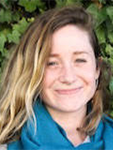
Simone Crowe has been the Oregon Green New Deal Policy Organizer at Oregon Just Transition Alliance since October 2020. Simone has a background in communications, field organizing (with the Portland Clean Energy Fund and the Oregon Clean Energy Opportunity campaigns), fundraising, and coalition organizing. She has worked for organizations including Partners for a Hunger-Free Oregon, Bradley Angle, Center for Sustainable Economy, OPAL Environmental Justice, Strategic Energy Innovations, and Pacific Northwest College of Art (PNCA). She has an MFA in Collaborative Design from PNCA where she applied human-centered design to community-engaged policy development.
Simone aims to facilitate creativity amidst moments of crisis, underscored by Grace Lee Boggs’ observation: “A revolution that is based on the people exercising their creativity in the midst of devastation is one of the great historical contributions of humankind.”
Some of her favorite things include collaborating with her colleagues, creating spaces for most-impacted communities to participate in a just transition, being useful, and laughing. Simone grew up on the coast of rural Maine, attended Prescott College in Arizona, and has lived in Portland, Oregon for the past decade. She loves being active outside (backpacking, climbing, sailing, skiing, bird watching) with her friends, family, and dog, Luigi.
Hannah Cruz
Senior Stakeholder Relations and Policy Manager, Energy Trust of Oregon
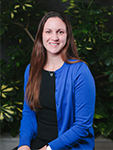
Hannah Cruz is a Senior Stakeholder Relations and Policy Manager at Energy Trust of Oregon, a nonprofit organization delivering energy efficiency and renewable power programs and incentives to 1.8 million utility customers across the state. In her role, Hannah makes connections between Energy Trust and the priorities and values of utility customers, communities, and elected leaders. She has experience in strategic communications, clean energy policy, strategic planning, media relations, public meeting facilitation, and team leadership. She has held multiple roles at Energy Trust for the past 15 years, including as Senior Communications Manager, and previously worked for the Oregon Department of Energy. Hannah is a board member of the NW Energy Coalition and a member of the City of Hillsboro Environmental Stewardship Committee. She holds Bachelor’s Degrees in environmental policy and journalism-mass communication from Drake University in Des Moines, Iowa.
Kat Brigham
Chair, Board of Trustees for the Confederated Tribes of the Umatilla Indian Reservation
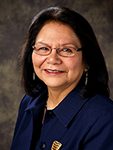
Kat Brigham is the Chairwoman for the Board of Trustees (BOT). This is her second consecutive term serving as Chair.
Kat has worked within the CTUIR’s Cultural Resource Protection Program, Yellowhawk Tribal Health Center and was also a former consultant for the Columbia River Inter-Tribal Fish Commission (CRITFC). Kat has provided testimony for a number of State and Federal hearings to advocate for Natural Resources and Treaty Rights on behalf of Tribal nations within the Pacific Northwest. She was and continues to be extremely instrumental in the restoration of Salmon to the Umatilla River and its tributaries.
Many organizations have recognized Kat’s work and accomplishments with awards, including CRITFC, the Oregon League of Women Voters, Pacific Salmon Commission, the CTUIR and more.
Kat’s appointments outside of the CTUIR include: the Accord Negotiation Team, Columbia Basin Collaboration, Columbia Development Authority, OR Willamette Falls Locks Commission, and Oregon Commission on Indian Service, Oregon Gaming Working Group, Salmon Principles Working Group, Tribal Negotiating Team, and UPRR Agreement.
In her free time, Kat enjoys participating in events at the Longhouse whenever possible and spending time with her husband and family.
Shawn Bonfield
Senior Manager of Regulatory Policy and Strategy, Avista

Shawn is a graduate of Eastern Washington University, completing both his Bachelor of Science degree in Computer Information Systems and a Master’s degree in Business Administration. Immediately following graduation in 2007, Shawn joined a subsidiary of Avista, Advantage IQ, as an Energy Procurement Manager. In January 2011, Shawn joined the Regulatory Affairs Department at Avista Utilities as a Regulatory Policy Analyst. In March 2018, Shawn began working as a commercial and industrial Account Executive and in April 2020 returned to the Regulatory Affairs Department in his current role as Senior Manager of Regulatory Policy and Strategy. Shawn is responsible for managing the Company’s Regulatory Policy team, which focuses on policy matters including energy assistance, energy efficiency, transportation electrification, electric and natural gas resource planning, the Clean Energy Transformation Act (CETA), renewable natural gas, service quality and reliability, customer service and consumer protections, amongst other responsibilities.
Shawn has been married to his wife Ashley for nearly 15 years and has two children, Ellie (9) and Carson (7). In his spare time, Shawn enjoys helping coach and watch his kids’ sporting activities, volunteering in his church and community as time allows, and enjoying as much time as possible outdoors boating, fishing, golfing, camping, and snow skiing.
Kate Ayres
Policy Advocate, Oregon CUB

Kate joined CUB as the Policy Advocate in the beginning of 2022. Prior to joining CUB, Kate worked as a policy organizer with Unite Oregon, and has also served two AmeriCorps terms with Solar Oregon and NeighborWorks Umpqua. Her work has focused on community needs and building strong connections with community and advocacy organizations.
Kate earned a M.Sc from University of Denver in Environmental Policy and Management with a concentration in energy and sustainability and a focus on climate justice. When not at work, she can be found reading fiction, perusing local record and music shops, or out on a walk with her dog, Aoife.
Opening Panel: The View on the Ground: A Conversation with Community Advocates
- Oregon Department of Energy: A Policy Brief on the Clean Energy Opportunity Campaign
Breakout Session 1: Community-Based Energy Projects
- Community Energy Project: Solar and Low-Income Participants
- City of Portland: Portland Clean Energy Community Benefits
- Oregon Department of Environmental Quality: Climate Protection Program
- Energy Trust of Oregon: Expanding benefits of energy efficiency: water reliability
- Political Economy Research Institute (PERI): Green for All
- Energy Trust of Oregon: Energy Trust Info Session and Q&A July 16,
- U.S. Department of Energy - Office of Indian Energy: Final Project Report (Umatilla)
- Oregon Department of Energy: Executive Summary & Link for Small-Scale Renewable Report
Breakout Session 1: Reflecting Community Needs in Utility Regulation
- GRID Modernization Lab Consortium : Advancing Equity in Utility Regulation
- Urban Sustainability Directors Network (USDN): Resilience Hubs
- RMI: Five Steps for Utilities to Foster Authentic Community Engagement
- Oregon State Legislature: House Bill 2475 (2021)
- Portland Clean Energy Fund (PCEF): PCEF Executive Summary
- National Association of Regulatory Utility Commissioners: Public Utility Commission Stakeholder Engagement: A Decision-Making Framework
- Oregon Department of Energy: Utility Resource Planning & Acquisition 101
Breakout Session 2: Rates, Affordability, and Community Investments
- Oregon State Legislature: Energy Affordability Act - HB 2475 (2021)
- Living Cully: Living Cully Community Energy Plan
- Community Action Partnership of Oregon: Community Action and Energy Affordability
- Oregon Public Utility Commission: UM 2211 Investigation into implementation of HB 2475
- Oregon Public Utility Commission: SB 978 Actively Adapting to the Changing Electricity Sector
- Oregon Citizens' Utility Board: 2022 Oregon Utility Interim Low-Income Discount Programs
Breakout Session 2: Navigating Utility Regulation and the PUC
- Oregon Public Utility Commission: UM 2055: Amending Internal Operating Guidelines
- Oregon Public Utility Commission: Laws Relating to the Public Utility Commission of Oregon 2020
- Regulatory Assistance Project (RAP): Basics of Traditional Utility Regulation and Oregon Context
- Oregon Public Utility Commission: SB 978 Actively Adapting to the Changing Electricity Sector
Travel and Accommodations
This year’s conference will be held at the University Place Hotel and Conference Center in Downtown Portland.
Click “View larger map” or “Directions” below for more information.
Public Transportation
We highly encourage the use of Portland’s TriMet transportation services. MAX light rail riders can access the hotel via stops at SW Lincoln and 3rd (orange line, both directions) or SW 5th and Jackson (orange, yellow, and green lines southbound.) Bus stops serving the #9, 12, 17, 19, 43, and 44 lines are also within a 2-5 minute walking distance from the hotel.
Other TriMet options can be found here.
Accommodations, Parking, and COVID-19 Safety
A limited courtesy block of rooms at the University Place Hotel will be available for attendees to book for the nights of Thursday, October 13 and/or Friday, October 14 on a first-come, first-served basis. The block includes options for a single King or two Double beds. Rooms are available at a rate of $125.28 per night. Guests can reserve rooms in this block by calling the hotel at 503-221-0140 and asking for the “Oregon CUB Block.”
The hotel has an on-site parking facility. Parking for CUB Conference attendees is $3/hr or $13 per day/overnight. (Current rates are subject to change.)
COVID Safety
CUB encourages attendees to wear masks during the conference. KN95 masks will be made available throughout the day. All conference rooms will have ventilation and tables will be spaced out as much as possible. Refunds will be available if you are unable to attend due to COVID-19 exposure.
WiFi Access
WiFi will be available during the conference for all attendees.
Select the network called “PSU Guest” and open a web browser and visit any non-HTTPS website (try http://pdx.edu). You will be redirected to the PSU Guest Wi-Fi Access page. Enter all the information required in the fields marked with an *(asterisk) and select Register by Email. This will give you a 10 minute window to check your email for a verification link. Log in to your email and look for a message from Portland State University. If you do not see it within a few minutes, please check your spam folder. Open the message and click the confirmation link. The confirmation link is only valid for 10 minutes. If you do not click the confirmation link within 10 minutes, you will need to repeat this process.
Sponsors
CUB is grateful to our generous sponsors for making the CUB Policy Conference possible. Sponsorship packages are available at a variety of levels. For information about conference sponsorship, contact Charlotte Shuff at .(JavaScript must be enabled to view this email address) or 503-719-8744.
Polar Bear

Brown Bear

Honey Bear





Media

Black Bear - Marketing